
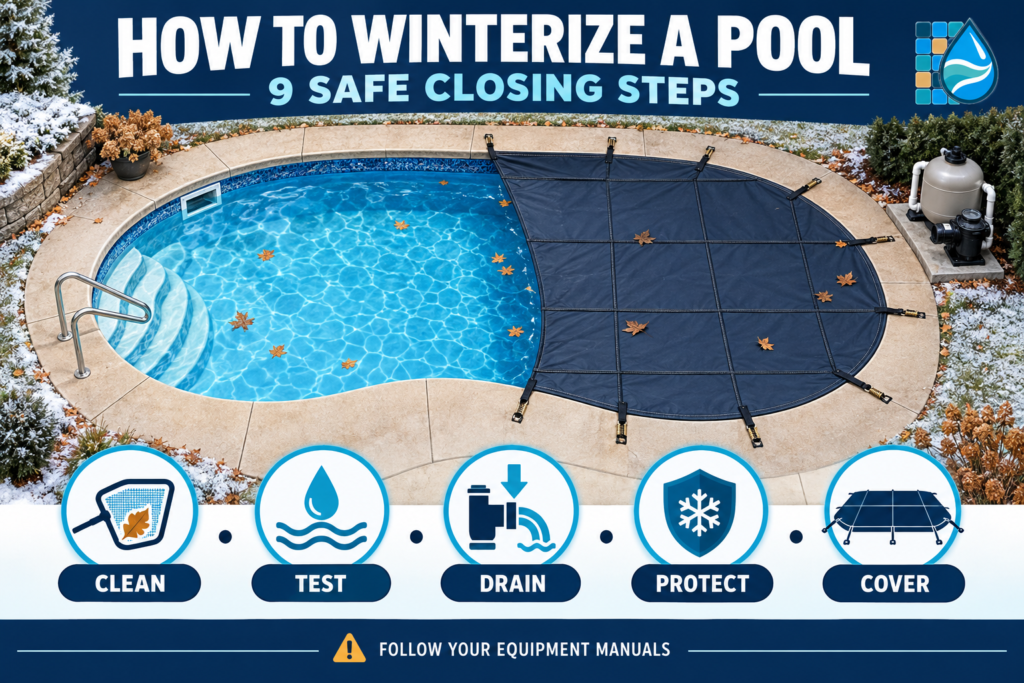
Learning how to winterize a pool starts with one decision: does your pool need a complete shutdown, or should it remain open with a cold-weather maintenance plan? Pools exposed to sustained freezing conditions usually need the water removed from vulnerable equipment and plumbing. Pools in mild climates often stay open and continue circulating. The correct choice depends on local weather, the pool and cover design, the plumbing layout, and the manuals for every installed component.
This guide gives homeowners a safe closing sequence without pretending that every pool drains the same way. Use it to organize the work, identify what you can handle, and recognize when a pool professional should protect the lines and equipment.
Before you begin: Never drain an entire pool unless the pool builder, surface manufacturer, or a qualified professional specifically directs it. Turn off the pump and prevent an automatic restart before moving valves, opening equipment, or removing drain plugs. Relieve filter pressure according to the exact manual. Do not work inside electrical or gas equipment.
Do you need to close the pool completely?
| Winter condition | Typical plan | What still matters |
|---|---|---|
| Sustained freezing weather | Full winterization is commonly required | Protect every water-holding component and pipe before the first hard freeze |
| Mild winter with little freeze risk | Keep the pool open or use a partial closure | Continue testing, circulation, cleaning, and weather monitoring |
| Occasional freeze or winter-storm risk | Maintain a written freeze plan | Automation and electricity can fail, so know how the system will be protected during an outage |
| Unknown plumbing, cover, or equipment layout | Arrange a professional closing | Guessing can leave trapped water, damage a liner, or create unsafe pressure |
Pentair’s current winter guidance distinguishes between Snowbelt pools that normally close and Sun Belt pools that may remain open. That is a useful framework, but it is not a substitute for local knowledge. A short, severe freeze can damage exposed equipment even where pools usually operate all year.
1. Identify the pool, equipment, and closing method
Before touching a valve, photograph the make and model labels for the pump, filter, heater or heat pump, sanitizer, automation system, cover, and any water features. Download the matching manuals and make a simple map of the suction lines, return lines, drains, and waste line.
Write down:
- the pool type and surface;
- the filter type: cartridge, sand, or D.E.;
- the normal valve positions;
- the clean-filter pressure at the usual pump speed;
- which lines serve the skimmer, main drain, spa, cleaner, and water features;
- where water is allowed to discharge;
- the cover manufacturer’s required water level.
Use the pool equipment glossary if you are still identifying parts. If a label is unreadable, the pool pump and filter model-number guide can help you find the information that controls the closing procedure.
2. Choose the closing date and watch the forecast
Do not close from the calendar alone. Closing too early can leave relatively warm water sitting with little circulation, while waiting until after a hard freeze can expose water-filled pipes and equipment to damage.
Choose a date that gives you enough time to clean, test, make any label-directed water adjustments, and finish the equipment work before freezing weather. If a storm is approaching, treat the deadline seriously. Freeze protection and automation can reduce risk during brief cold weather, but they depend on correctly configured equipment and a working power supply.
Pools that remain open still need a winter schedule. The seasonal pool-care guide explains how testing, debris removal, and circulation change as temperatures and use decline.
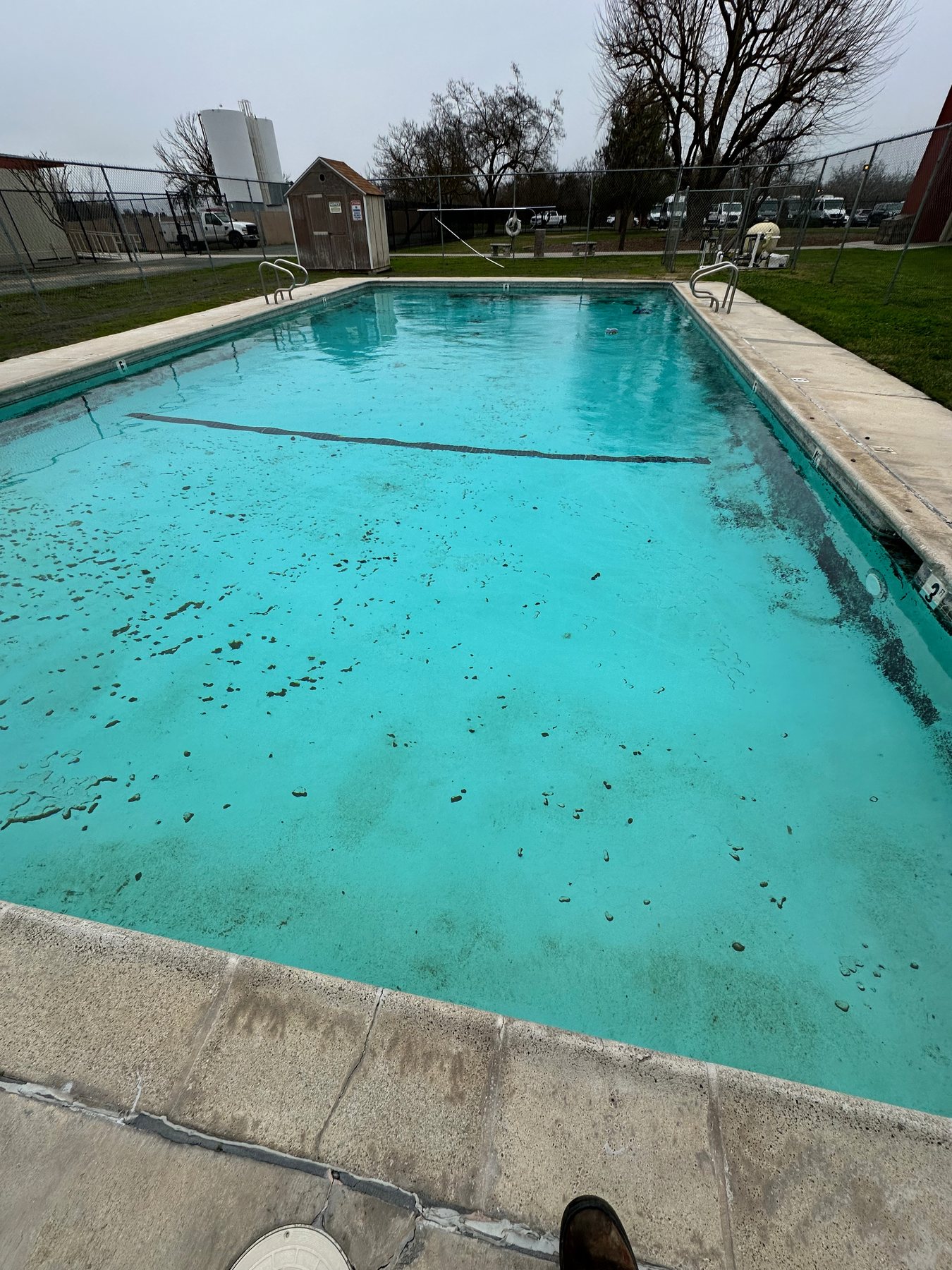
3. Remove debris and clean the pool
Start with the skimmer and pump baskets, then skim the surface, brush the walls and steps, and remove settled debris. Organic debris left beneath a cover can consume sanitizer, stain surfaces, and make spring cleanup harder.
Clean carefully instead of stirring a heavy leaf load into the circulation system. A deep leaf rake is usually better for large debris than forcing everything through the skimmer or cleaner. The leaf-removal guide shows a safe order for clearing the surface and floor.
4. Test and balance the water from measured results
Test the water accurately before the circulation system is shut down. Record the disinfectant, pH, total alkalinity, calcium hardness, and cyanuric acid results that apply to your pool. Adjust only from measured results, the pool-surface requirements, and the product label.
Some closing plans call for an oxidizer, algaecide, stain-control product, or other winter treatment. Do not assume every pool needs the same products or doses. Products can be incompatible, and adding them together can create heat, splashing, fire, or toxic gas. The CDC recommends keeping pool chemicals dry, separated, secured, and in their original labeled containers.
If a label requires circulation time between additions, complete it while the system is operating normally. Never mix chemicals together, never combine different chlorine products, and never add water to a concentrated chemical unless that exact label directs the procedure. Wear the protective equipment listed on the label.
For a repeatable sampling process, use How to Test Pool Water Accurately.
5. Set the water level for the exact pool and cover
There is no safe universal instruction to “drain below the skimmer.” The correct level can differ for vinyl-liner, fiberglass, and concrete pools; solid, mesh, and automatic covers; skimmer protection devices; and local groundwater conditions.
Follow the pool builder’s and cover manufacturer’s directions. Lower the water only as far as the approved closing plan requires, monitor the discharge continuously, and comply with local rules. Never allow the pump to run dry.
An empty or over-drained pool can suffer liner movement, surface damage, structural stress, or movement caused by groundwater pressure. If you do not know the permitted level—or if the site has a high water table—stop and get professional guidance.
6. Clean the filter and record the baseline
Finish the season with a properly serviced filter so debris is not stored in the media or elements for months.
- Cartridge filter: Shut off power, prevent restart, relieve all pressure, verify the gauge reads zero, and open the tank only as the filter manual directs. Clean and inspect the cartridges before reassembly or dry storage.
- Sand filter: Backwash and rinse only if the exact filter and multiport valve are designed for it. Turn the pump off before every valve-position change.
- D.E. filter: Follow the model-specific cleaning, draining, grid-inspection, and media instructions. Do not assume a sand-filter sequence or dosage applies.
Record the clean pressure if the system will run again before shutdown. Use How to Clean a Pool Filter for the safety sequence and Pool Multiport Valve Positions Explained before selecting Backwash, Rinse, Waste, Closed, or Winter.
7. Shut down and drain the equipment exactly as directed
Once water care and cleaning are complete, follow each manual’s shutdown and pressure-relief sequence. Common winterization procedures remove trapped water from pumps, filters, heaters, sanitizers, solar systems, booster pumps, and water-feature equipment, but plug locations and internal flow paths vary.
Several current pump and filter manuals instruct owners to remove drain plugs, protect the O-rings, and store the plugs for spring. They also warn that trapped water can freeze and cause equipment damage. Do not copy plug locations from a different model.
Important boundaries:
- Prevent timers, remote controls, and freeze programs from unexpectedly starting drained equipment.
- Verify the filter is depressurized before opening any air-relief valve, clamp, lid, or drain.
- Keep pump motors dry, but do not wrap them tightly in plastic; manufacturer manuals warn that trapped condensation can cause corrosion or damage.
- Have a qualified technician handle electrical disconnection, gas appliances, heater internals, damaged wiring, and any unclear equipment path.
- Keep removed plugs and small parts together in a labeled container attached to or stored beside the equipment.
8. Protect the plumbing and vulnerable fittings
Water trapped in a pipe, valve, heater, or fitting can expand when it freezes. Protecting those hidden low points is the part of closing most likely to justify professional help.
A complete freeze-climate closing may involve isolating lines, clearing water with controlled air, installing winter plugs or skimmer protection, and adding an approved propylene-glycol product where the equipment manual permits it. These are not one-size-fits-all steps. Excess air pressure, a poorly secured plug, or the wrong valve position can damage plumbing or launch a fitting.
If you do not already know the line layout, required air pressure, and order of operations, hire an experienced pool professional to protect the lines. Never improvise with a high-pressure compressor.
Do not use automotive antifreeze. Some pool-equipment manuals allow only propylene glycol for specific undrainable areas; other equipment may prohibit antifreeze or require a different method. Follow the exact manual and product label, and keep every chemical in its original container.
9. Install the cover and create a winter check schedule
Inspect the cover, anchors, straps, tracks, cable, water bags, air pillows, or pump required by your exact system. Repair damage before installation. A cover must fit and be secured according to its instructions; a loose or damaged cover can create a safety hazard and allow debris into the pool.
After closing:
- inspect the cover after wind, rain, or snow;
- maintain the water level required by the cover manufacturer;
- remove standing water or excess snow only with the approved method;
- keep children and pets away from the covered pool;
- never assume a cover is safe to walk on;
- check the equipment pad for leaks, displaced plugs, animal damage, or weather exposure;
- keep a written list of everything removed or changed for spring startup.
Cover-Pools owner guidance recommends checking the pool water level at least monthly during winter. Your cover’s manual controls, but a recurring monthly inspection is a sensible reminder for any closed pool.
Pool-closing mistakes that can cost the most
- Closing without identifying the equipment. A generic video cannot show the hidden flow path in your plumbing.
- Moving a multiport valve while the pump runs. Stop the pump and wait for it to stop completely.
- Leaving water trapped in freeze-prone equipment. One missed low point can crack an expensive component.
- Over-draining the pool. Water level affects liners, structures, groundwater pressure, and cover support.
- Using automotive antifreeze. Use only a product and method allowed by the exact equipment instructions.
- Mixing closing chemicals. Separate products, follow their labels, and allow required circulation time.
- Assuming freeze automation cannot fail. Power, sensors, internet services, programming, and valves can all fail.
- Wrapping a pump motor tightly in plastic. Trapped moisture can create condensation and corrosion.
- Installing a damaged or incorrect cover. Follow the cover system’s fit, water-level, and maintenance instructions.
When to call a pool professional
Professional winterization is the safer choice when:
- sustained freezing is expected and the lines must be cleared with air;
- the pool combines a spa, heater, solar system, water features, in-floor cleaning, or complex automation;
- you cannot identify every suction and return line;
- the correct water level is unclear;
- a valve, drain plug, clamp, pressure gauge, cover anchor, or electrical component is damaged;
- the equipment pad has gas, electrical, or concealed plumbing work;
- the pool has known groundwater, liner, structural, or leak concerns;
- this is the pool’s first winter under your ownership.
A professional closing is not an admission that DIY pool care failed. It can protect the parts of the system that are hidden and difficult to verify while you continue handling the cleaning, testing, records, and winter inspections yourself.
Frequently asked questions
Do all pools need to be winterized?
No. Pools in sustained freeze climates commonly require a full closing, while many mild-climate pools remain open with reduced but ongoing maintenance. Use local freeze history and the exact equipment manuals to choose the plan.
What position should the multiport valve be in for winter?
Use only the position specified by the valve and filter manuals. Some valves have a Winter or Winterize position that disengages the diverter for drained storage. It is not a running position. Turn the pump off before moving the handle.
Should I lower the water below the skimmer?
Only if the approved plan for your pool, skimmer, and cover requires it. Some partial-closure systems need the normal level for circulation, while other full closures use a lower level or a skimmer protection device. Never apply one generic depth to every pool.
Can I put antifreeze in pool plumbing?
Only when the exact equipment instructions allow it and the product is intended for pool or RV plumbing. Current manufacturer manuals commonly identify propylene glycol as the permitted type and warn against other antifreezes. Never use automotive antifreeze.
Can I winterize a pool myself?
Many owners can clean, test, organize manuals, remove accessories, and monitor the cover. Clearing unknown lines, winterizing heaters and complex systems, or performing electrical and gas work is better left to qualified professionals.
Do drain plugs stay out all winter?
Many pump and filter manuals say to leave designated drain plugs out and store them safely, but the exact model instructions control. Protect the O-rings and make a spring-startup checklist so no plug is missed.
The bottom line
To winterize a pool safely, clean it, test from measured results, set the correct water level, service the filter, shut down and drain equipment according to its manuals, protect freeze-prone plumbing, install the correct cover, and inspect the system through winter.
The most valuable DIY skill is knowing where a generic checklist ends. If the plumbing route, air-clearing procedure, electrical isolation, heater drainage, or cover requirement is uncertain, stop before guessing and bring in a qualified pool professional.
Chris Barnes is a former pool-service company owner with more than seven years of residential and commercial pool-service experience. Swimming Pool Resource turns field experience and current manufacturer guidance into practical steps homeowners can use to troubleshoot, service, and maintain their pools.