
By Chris Barnes · Former pool-service company owner · 7+ years of residential and commercial experience
This pool equipment glossary is easier to use when you stop seeing your equipment pad as a collection of pipes and start seeing it as a path.
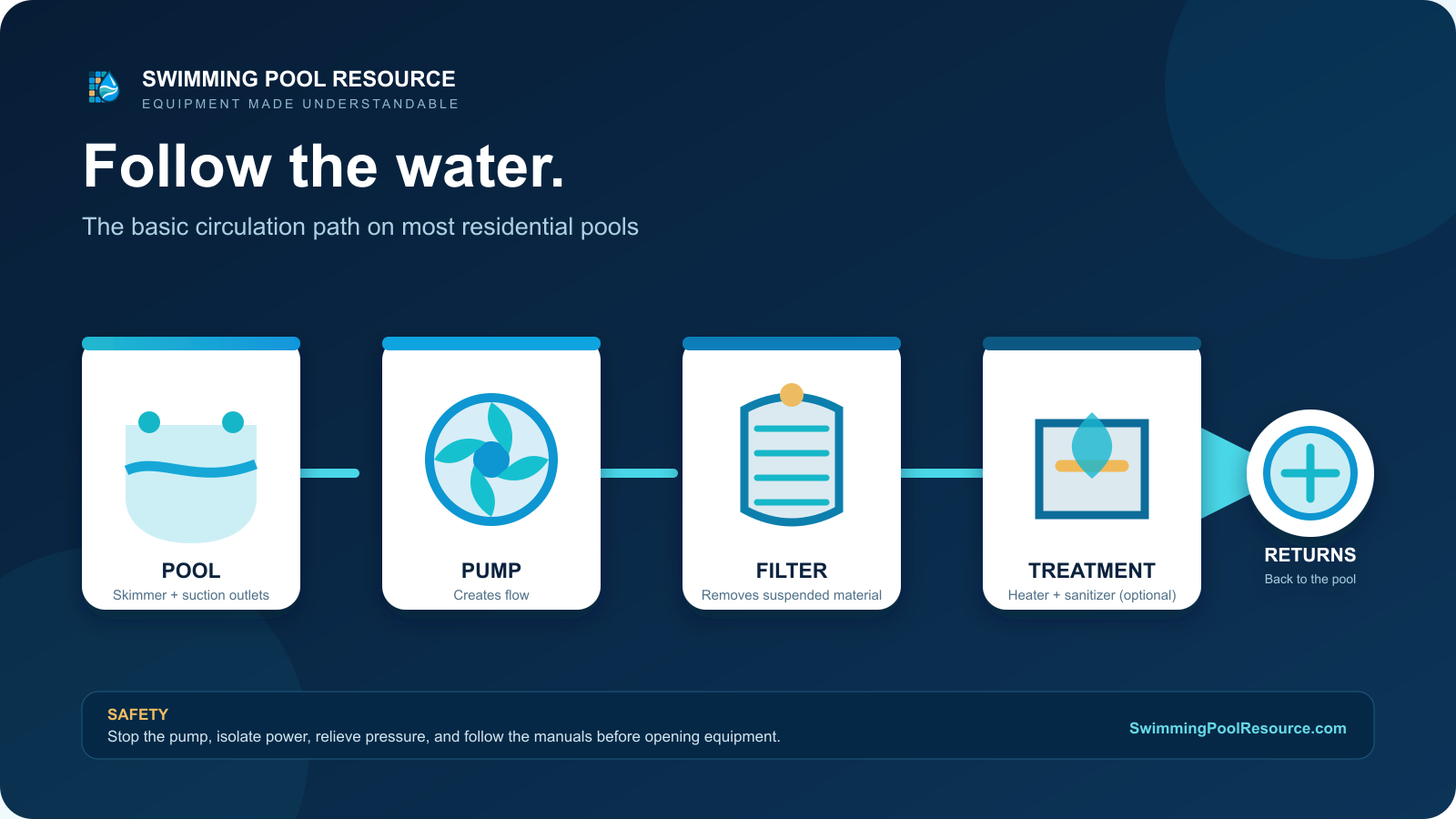
Water leaves the pool through a skimmer or another suction outlet. The pump keeps it moving. The filter removes suspended material. Optional equipment heats or treats the water. Return fittings send it back to the pool.
Once you can trace that route, unfamiliar equipment names become much less intimidating—and symptoms such as bubbles, high filter pressure, weak returns, or a noisy pump become easier to describe.
The quick answer: follow the water
Pool → skimmer or suction outlet → suction valves → pump → filter → heater or sanitizer → return valves → return jets → pool
Your system may include a spa, cleaner, solar heater, water feature, chemical feeder, salt cell, automation, or bypass loop. Those additions can create branches, but the basic rule stays the same: water enters on the suction side of the pump and leaves on the pressure side.
Safety first: Turn off the correct breaker before opening or servicing pool equipment. Never loosen a pump lid, filter clamp, union, or valve on a running or pressurized system. Open the filter’s manual air-relief valve and confirm the pressure gauge reads zero before opening equipment. Follow the manuals for your exact models.
Pool-side components
Skimmer
The skimmer is the opening near the pool’s waterline. Moving water carries leaves, insects, pollen, and other floating material into its basket before that debris reaches the pump.
What normal looks like: Water sits around the middle of the skimmer opening, the weir door moves freely, and the basket is not packed with debris.
What to notice: A low water level, stuck weir door, or full basket can restrict the pump’s water supply. A vortex that repeatedly pulls air into the skimmer can produce bubbles at the returns and may cause the pump to lose prime.
Skimmer weir
The weir is the small swinging door inside many skimmers. It helps draw a thin layer of surface water—and the debris floating on it—into the basket. When the pump stops, the weir also helps keep collected debris from drifting back into the pool.
Main drain or submerged suction outlet
The fitting commonly called a main drain is usually a suction outlet, not a drain plug that empties the pool. Depending on the plumbing, it may pull water from a deeper part of the pool or share flow with the skimmer.
Important safety distinction: A submerged suction outlet can present an entrapment hazard. Do not use a pool with a loose, cracked, broken, or missing drain cover. Keep swimmers away and have the cover and suction system evaluated by a qualified professional. Do not attempt to replace a submerged cover while the circulation system is operating.
Dedicated cleaner or vacuum line
Some pools have a separate wall fitting connected to a suction-side cleaner or vacuum hose. Others use a pressure-side cleaner connection after the pump. Label the line before changing valves because the two arrangements behave differently.
Suction-side equipment
The suction side runs from the pool to the pump’s impeller. Air can be pulled into a small leak here even when little or no water leaks out.
Suction valves
These valves control which lines feed the pump—often the skimmer, main drain, spa drain, or cleaner line. Their handles may show which port is closed, but valve styles differ. Photograph and label the normal positions before moving anything.
What normal looks like: At least one intended suction path is fully open whenever the pump runs.
What to notice: A closed or badly positioned valve can starve the pump. Never assume a handle position without identifying the ports it controls.
Pump strainer housing and basket
The clear-lidded chamber at the front of many pumps is the strainer housing, sometimes called the pump pot. Its removable basket catches debris that passed through the skimmer basket.
What normal looks like: With the pump running, the housing stays mostly full of water. At low variable-speed settings, a small stable air pocket may be normal for some systems.
What to notice: A basket packed with debris restricts flow. Persistent churning, repeated emptying, or a growing air pocket can point to low pool water, a blocked line, the wrong valve position, or a suction-side air leak.
Pump lid and O-ring
The clear lid seals the strainer housing. The O-ring beneath it prevents the pump from pulling air through the lid joint.
Keep the sealing surfaces clean, seat the O-ring flat, and follow the pump manual’s lubrication instructions. Some seals require a manufacturer-approved lubricant; others should not be lubricated. Hand-tighten the lid as directed—do not use tools unless the manual specifically calls for them.
Pump motor and impeller
The motor turns the impeller inside the wet end of the pump. The impeller creates the pressure difference that moves water through the system. It does not “pull” effectively when the pump housing is full of air, which is why many above-water installations must be primed after the lid has been opened.
What normal looks like: The pump has a steady sound, maintains water in the strainer housing, and produces consistent return flow.
Stop and call a professional for: Breaker trips, a burned smell, exposed or damaged wiring, severe overheating, a cracked housing, grinding or screeching, or water entering the electrical side of the motor.
Pressure-side equipment
Everything after the impeller is on the pressure side. A restriction here commonly raises filter pressure and reduces return flow.
Filter
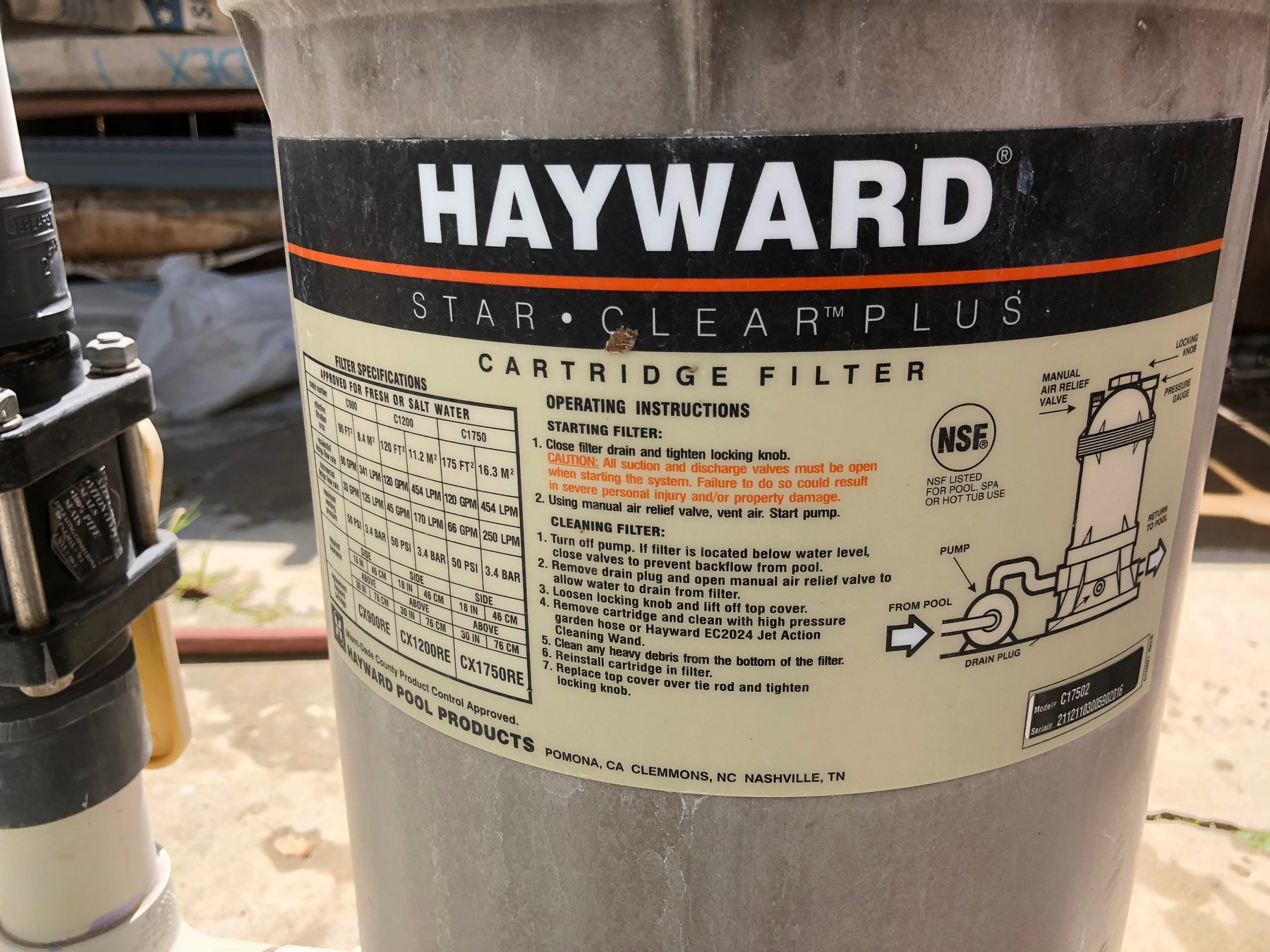
The filter removes suspended material from circulating water. Residential pools commonly use cartridge, sand, or diatomaceous earth (D.E.) media.
- Cartridge filter: Water passes through pleated cartridges that are removed for cleaning.
- Sand filter: Water passes through a bed of filter sand. Many models are cleaned by backwashing.
- D.E. filter: Grids or elements hold diatomaceous earth that provides fine filtration. The exact cleaning and recharge procedure is model-specific.
Filters support water clarity, but they do not replace sanitation or balanced water. Compare performance and pressure with the clean starting pressure for your own system rather than relying on a universal PSI number.
Pressure gauge
The gauge shows pressure inside the filter tank. Its most useful reference is the reading recorded just after the filter has been correctly cleaned and the system has returned to normal operation.
Higher than normal often points to resistance after the pump, such as dirty filter media, a restricted return path, or an incorrect valve position.
Lower than normal often points to reduced flow before or at the pump, such as a full basket, suction blockage, air leak, or pump problem.
A gauge that never leaves zero—even when strong return flow is present—may be damaged.
Manual air-relief valve
The air-relief valve at the top of many filters allows trapped air to escape during startup. Manufacturer instructions commonly require opening it before starting the pump and closing it only after a steady stream of water appears.
Never lean over a filter during startup. Pressurized air can make improperly secured components separate violently.
Multiport or push-pull valve
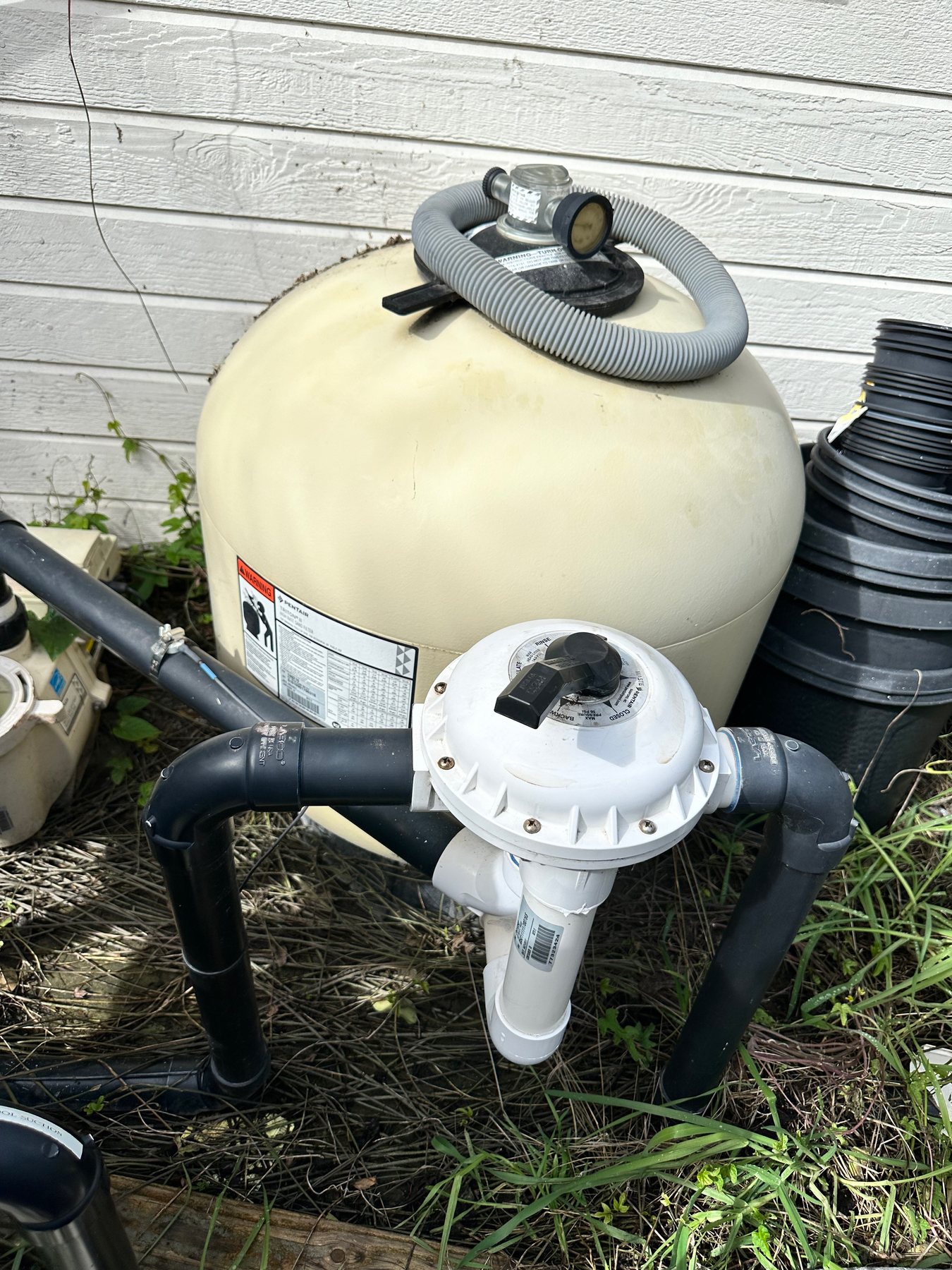
Some sand and D.E. filters use a multiport valve to select filter, backwash, rinse, waste, recirculate, or closed modes. Other systems use a push-pull valve for filtering and backwashing.
Always stop the pump before changing the position. Mode names and procedures vary, so follow the label and the filter manual. Running a pump against a closed valve can create a hazardous pressure condition.
Heater or heat pump
A gas heater transfers combustion heat to circulating water. A heat pump moves heat from the surrounding air into the water. Both require adequate flow and have model-specific clearances, electrical, gas, venting, and bypass requirements.
If a heater reports a flow or pressure error, first look for an upstream circulation problem: low pool water, packed baskets, a dirty filter, a closed valve, or insufficient programmed pump speed. Gas odor, soot, rollout, damaged wiring, or repeated safety shutdowns require qualified service.
Salt chlorine generator
A salt system uses an electrolytic cell to generate chlorine from dissolved salt while water is flowing. It is still a chlorine pool: it still needs routine testing, appropriate water balance, and enough circulation for the cell to operate.
The cell, its power center, and any flow switch are separate parts. A low-flow warning does not automatically mean the cell has failed; it can be caused by restricted circulation, valve position, air, or insufficient pump speed.
If the system appears to be running but the sanitizer level keeps falling, use the chlorine-loss diagnostic guide to check sunlight, demand, dilution, testing, and equipment delivery before increasing output.
Tablet feeder or liquid-chemical system
Some pools use an inline or offline feeder after the filter and heater. Follow its model instructions and chemical label. Never mix pool chemicals or place an incompatible product into a feeder. Never add chlorine tablets, acid, or undiluted pool chemicals to the pump pot or skimmer.
Check valve
A check valve allows flow in one direction. It may help prevent elevated spa water, solar plumbing, or a chemical feeder from draining backward when the pump stops.
A transparent lid can make operation easier to observe, but do not open the valve while the system is running or pressurized. Internal flappers, springs, and seals wear and may require model-specific service.
Return valves and bypass valves
Return valves direct filtered water to the pool, spa, water feature, solar system, or other branch. Bypass valves route water around a component when the system was designed to allow it.
Never improvise a bypass or move unfamiliar valves while the pump is running. A wrong combination can block flow, drain a raised spa, or send water through equipment that is not ready to operate.
Return jets
Return fittings send treated water back into the pool. Their direction can influence surface movement and help guide floating debris toward the skimmers.
What normal looks like: Flow is steady and reasonably consistent with your recorded baseline.
What to notice: Weak flow at every return suggests a system-wide restriction or low pump output. One weak return may point to a branch-specific issue. Persistent bubbles often indicate air entering on the suction side or trapped air being purged after service.
Controls and optional branches
Timer, variable-speed controller, or automation system
Controls decide when the pump runs and may coordinate the heater, sanitizer, valves, cleaner, lights, and water features. A schedule that looks correct on the pump can still be overridden by automation—or vice versa.
Record which device is actually in control before changing a schedule. Do not use a fixed “hours per day” rule without considering pool size, pump flow, weather, bather load, sanitizer needs, and connected equipment.
Spa suction and return
A pool-spa combination often has separate suction and return lines. Automated actuators may rotate valves when spa mode is selected. Do not force an actuator or manually change a valve without understanding the control mode and the open flow path.
Solar heating
Solar systems divert water to roof-mounted collectors and return it to the equipment path. They may include a three-way valve, actuator, check valve, vacuum-relief valve, and temperature sensors. Roof plumbing should be inspected and repaired by a qualified solar or pool professional—do not climb onto a roof to chase a suspected air leak.
Booster pump
A pressure-side cleaner may have a separate booster pump. It should operate only when the main circulation pump is supplying the required flow. Follow both manufacturers’ schedules and interlock instructions.
How to map your equipment pad without taking anything apart
- Turn the system off. Use the normal stop control and make sure nothing can start automatically while you are labeling.
- Begin at the pool. Identify skimmers, suction outlets, cleaner fittings, and returns without touching submerged covers.
- Find the pipe entering the pump. That is the suction path.
- Follow the pump discharge to the filter. Look for arrows molded into valves or printed on labels.
- Trace optional equipment after the filter. Note the heater, salt cell, feeder, solar loop, check valves, and bypasses.
- Find the return branches. Label pool, spa, cleaner, and water-feature lines only when you are confident.
- Photograph the normal setup. Capture valve positions, gauge reading, controller screen, and equipment labels.
- Write down make and model numbers. Download the correct manuals and keep them with your equipment map.
Do not open electrical panels, heater cabinets, filter clamps, pump lids, or chemical feeders just to identify a component.
A simple “normal” baseline to record
| Observation | Record when the pool is operating normally |
|---|---|
| Pump | Program, speed or flow setting, sound, and water level under the lid |
| Filter | Clean starting pressure and date last cleaned |
| Returns | Strength, bubbles, and which fittings are active |
| Skimmer | Water level, weir movement, and surface pull |
| Valves | Photo and label for each normal mode |
| Heater or sanitizer | Normal status lights and minimum-flow behavior |
| Water | Clarity, test results, temperature, and recent use |
That baseline turns “something seems different” into useful information: filter pressure is six PSI above my clean reading, bubbles appeared after the skimmer basket was cleaned, or the heater works at the higher pump program but not the normal one.
When to stop troubleshooting
Turn off the affected equipment and call the appropriate qualified professional when you see or smell an electrical problem, gas or combustion issue, leaking or cracked pressure vessel, loose or damaged submerged suction cover, significant chemical exposure, recurring breaker trip, or a condition you cannot safely isolate.
This guide is for identification and observation. It is not a substitute for the manuals, local requirements, or professional service for electrical, gas, pressure-vessel, structural, or submerged-suction work.
Pool equipment glossary FAQ
Is the main drain supposed to empty the pool?
Usually no. The fitting commonly called the main drain is generally a submerged suction outlet connected to the circulation system. Plumbing layouts differ, and some pools have no active main-drain line.
Which piece of equipment should come first after the pump?
The filter normally comes immediately after the pump. Heaters and treatment equipment are generally downstream, but the exact order, check valves, and bypasses depend on the equipment and manufacturer instructions.
Why is there air under my clear pump lid?
A small stable pocket may occur on some systems at low speed. A growing pocket, repeated loss of prime, bubbles at the returns, or a pot that will not fill suggests low water, a restricted suction path, an air leak, or an incorrect valve position.
What pressure should my pool filter show?
There is no universal normal PSI. Record the gauge reading just after the filter is correctly cleaned and the system is operating in its normal configuration. Compare future readings with that clean baseline and the filter manual.
Can I turn valves while the pump is running?
Do not move a multiport filter valve while the pump is running. For other valves, unfamiliar changes can block flow or create unexpected system behavior. Stop the pump and use your labeled equipment map and manuals.
Learn the equipment one system at a time
You do not need to memorize the entire pad. Start with the water path, record what normal looks like, and then learn each branch as you use it.
Next, explore the pool pump guide, compare filter types, or learn how to prime a pool pump safely. If you still cannot identify part of your setup, use Ask Chris and include a wide photo of the pad plus close-ups of the labels.
Sources and review notes
Written for homeowner education and structured around Swimming Pool Resource’s existing equipment guides. The instructions for the exact installed equipment and applicable local rules take priority.
- Pentair IntelliFlo3 / IntelliPro3 VSF Installation and Maintenance Guide
- Pentair Pool Filter Product Safety & Help Center
- U.S. Consumer Product Safety Commission: Swimming Pools/Spas Drain Entrapment
- CDC Model Aquatic Health Code — public aquatic-facility guidance used only as general circulation and safety context; it is not presented here as a residential code.