
By Chris Barnes · Former pool-service company owner · 7+ years of residential and commercial experience
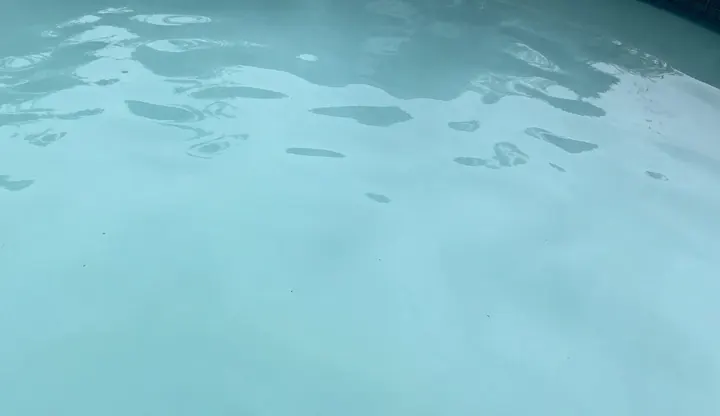
Cloudy pool water is a warning sign, not a condition to ignore. The cause may be water balance, weak circulation, fine debris, early algae, or a filter that is loaded, undersized, damaged, or bypassing material. The fastest safe fix is to identify which part of the system changed before adding another product.
Safety first: If you cannot clearly see the bottom of the deepest area, keep everyone out of the pool. Do not mix chemicals, add one product directly after another, open a pressurized filter, or move a multiport valve while the pump is running. Follow the labels and the manuals for the exact equipment installed.
Cloudy Pool Water: The Quick Answer
Start with visibility, accurate chlorine and pH tests, the normal water level, pump prime, return flow, clean baskets, and filter pressure at the same pump speed and valve position. Then brush and vacuum, allow the system time to filter, and look for material returning through the inlets. Treat a verified water problem; repair a mechanical problem.
Why pool clarity is a safety issue
Clarity is not only cosmetic. Union County Environmental Health explains that the bottom and main drain should be visible from the deck because poor visibility can delay recognition of a swimmer in trouble. The agency also identifies water chemistry, filtration, and circulation as common systems to investigate when water is hazy.
CDC describes chlorine and pH as the first defense against germs and recommends routine testing. It notes that pH affects chlorine performance and that swimmer contaminants and sunlight can reduce chlorine. Use a repeatable testing routine from the pool-water testing guide before deciding what cloudy water needs.
A real service-call lesson: when the filter sends debris back
One cloudy-water service call involved a pool with extremely hazy water and a diatomaceous earth (DE) filter. After diagnosing the system, I found holes in the filter grids. The damaged grids were allowing DE powder to bypass the filter and circulate right back into the pool.
The repair was to replace the damaged grids, then vacuum the DE that had settled to the bottom to waste using the procedure appropriate for that system. Once the filter was repaired and the loose material was removed, the pool became clear again.
That job is a good reminder: cloudy pool water is not always a chemistry problem. If clarity does not improve after testing, circulation checks, and normal filter maintenance, inspect the equipment—or have a qualified professional do it. The Pool Equipment Glossary explains how the pump, valves, filter, and returns work together.
7 Common Causes of Cloudy Pool Water
- Low sanitizer or pH outside the useful range. CDC recommends routine chlorine and pH testing because both affect the pool’s ability to control germs. Confirm an unexpected result with a reliable test before making a label-directed correction.
- Fine debris and a sudden organic load. Pollen, ash, soil, leaves, sunscreen, and heavy swimmer use can create particles or consume sanitizer faster than the system removes them.
- Weak or uneven circulation. A low water level, blocked basket, air leak, closed valve, lost pump prime, short schedule, or unsuitable speed can leave parts of the pool under-circulated.
- A loaded or incorrectly serviced filter. Compare pressure only with the clean baseline at the same pump speed and valve position. Maintenance thresholds vary by filter; follow its exact manual rather than a universal pressure number.
- Damaged filter internals or valve bypass. Torn cartridges, damaged DE grids, cracked manifolds, missing seals, channeling sand, or a valve problem can allow material to return to the pool.
- Early algae or suspended dead algae. A dull or green cast, slippery areas, rapid chlorine loss, or dust that returns after brushing can point to an active growth problem or debris left after treatment. Use the chlorine-loss diagnostic guide if sanitizer will not hold.
- A recent addition or water-balance change. Some products, fill-water conditions, or abrupt balance changes can leave temporary suspended material. Record what was added, retest, and avoid stacking products without label guidance.
How to Clear Cloudy Pool Water: 7 Diagnostic Steps
- Make the safety decision first. If the deepest floor or drain area is not clearly visible, close the pool until clarity returns.
- Test before treating. Measure free chlorine and pH, then consider total alkalinity, stabilizer (CYA), and calcium hardness in the context of the pool and products. If stabilized chlorine has been used heavily, review the high-CYA guide.
- Verify water level and pump prime. Confirm the skimmer has enough water, the pump basket fills normally, and obvious air is not entering the system. If the skimmer is weak, use the pool-skimmer troubleshooting guide.
- Check the actual circulation path. Empty baskets, confirm valves are in their intended positions, compare return flow with the normal baseline, and verify the timer or automation schedule actually ran.
- Read the filter at a consistent operating point. Compare the gauge at the same speed and valve position with the recorded clean-filter pressure. Clean or backwash only when the exact manufacturer’s instructions call for it. Stand clear of the filter and never service it while pressurized.
- Brush, vacuum, and allow filtration time. Brush steps, walls, ladders, and low-flow areas. Vacuum settled debris by the method appropriate for the system, monitor pressure, and retest instead of assuming one treatment solved the cause.
- Watch the returns and escalate damage. DE powder, sand, or visible debris returning to the pool suggests a filter or valve issue. Shut the system down if the manual identifies that condition as unsafe, and call a qualified pool professional when internal inspection is required.
How to Tell When the Filter Is the Problem
| What you observe | Check next |
|---|---|
| Cloudiness improves while the pump runs, then returns | Schedule, flow, baskets, pressure trend, and overnight debris |
| DE, sand, or debris comes from the returns | Internal filter parts, seals, multiport valve, and reassembly |
| Pressure rises and return flow weakens | Clean/filter-service threshold in the exact manual |
| Pressure stays unusually low with weak flow | Water level, suction blockage, air leak, pump prime, and valve position |
| Water remains cloudy after chlorine and pH are verified | Fine debris, circulation coverage, filter media, and damaged internals |
What Clarifier and Flocculant Can—and Cannot—Do
A clarifier may help a functioning filter capture very fine particles, while a flocculant is intended to gather material so it can settle for removal. Neither product restores sanitizer, repairs a torn grid, corrects a valve position, or replaces adequate circulation. Compatibility also depends on the filter and sanitizer system. Use either product only if its label and the equipment instructions allow it.
If the water became cloudy after a recent treatment, work through Pool Still Cloudy After Shock? 7 Checks That Help before adding something else.
Cloudy Pool Water FAQ
Is it safe to swim in a cloudy pool?
Do not swim when you cannot clearly see the bottom of the deepest area. Poor clarity can hide a swimmer in distress and may signal a chemistry, circulation, filtration, or contamination problem.
Will running the pump clear cloudy water?
It can help if the chemistry is verified, flow is adequate, and the filter is functioning. More runtime will not repair damaged filter parts, correct a suction leak, or solve an unverified sanitizer problem.
How long should cloudy pool water take to clear?
There is no universal time. Particle size, pool volume, actual flow, filter condition, debris load, and the underlying cause all matter. Look for measurable improvement while monitoring pressure and test results; do not keep the pool open if visibility is inadequate.
Why is my pool cloudy even though the tests look normal?
Confirm the result and sampling method, then inspect water level, pump prime, valve position, return flow, filter pressure, recent weather, swimmer load, and material returning through the inlets. A mechanical or fine-particle problem can exist even when a basic test appears normal.
The Bottom Line
Cloudy pool water is best solved as a diagnosis, not a shopping list. Make visibility the first safety check, verify chlorine and pH, establish circulation and filter baselines, remove debris, and repair damaged equipment. Change one variable at a time so the result tells you what actually worked.
Sources and Review Notes
Written and field-reviewed by Chris Barnes. Former Northern California pool-service company owner with more than seven years of residential and commercial experience. Last reviewed September 8, 2026. Product labels, equipment manuals, and applicable state or local rules take priority.