
By Chris Barnes · Former pool-service company owner · 7+ years of residential and commercial experience
High cyanuric acid in a pool can make chlorine less responsive even when the free-chlorine number looks high.
It is frustrating: the water is cloudy or greenish, the filter is clean, the pump is moving water, and the chlorine reading looks high. Many pool owners respond by adding even more chlorine. Sometimes that only adds cost without solving the underlying problem.
Cyanuric acid—usually called CYA or stabilizer—protects chlorine from sunlight. Too much changes how efficiently sanitizer responds, so a pool can show free chlorine on a test while still struggling to stay clear.
Safety first: Do not keep adding chlorine to chase a surprising result, mix pool chemicals, or begin a large drain until you have confirmed the test and reviewed the product labels, pool construction, groundwater risk, discharge rules, and equipment instructions.
High Cyanuric Acid in a Pool: The Quick Answer
Confirm the CYA reading with a reliable test, review whether recent tablets or granular products add stabilizer, and compare chlorine and pH at the same time. If CYA is genuinely excessive, the practical correction is usually controlled water replacement—not another additive. A partial drain may be safer than a full drain, and some pools should not be drained without professional planning.
If the sanitizer level itself keeps falling, use the chlorine-loss diagnostic guide to separate sunlight, contamination, circulation, dilution, equipment delivery, and testing problems.
What cyanuric acid does
CYA is a chlorine stabilizer commonly introduced by stabilized chlorine products, including many trichlor tablets and dichlor shocks. Unlike free chlorine, CYA does not simply disappear after doing its job. It accumulates over time unless water is replaced.
In a properly balanced outdoor pool, stabilizer helps chlorine last longer in the sun. But when the level rises too high, the chlorine may be less effective at handling algae and other contaminants at the chlorine level you normally maintain.
Signs CYA may be too high
- The water stays hazy or starts turning green even though free chlorine tests high.
- You are adding chlorine more often, with little improvement.
- The pool has been fed tablets regularly for months or years.
- Tablets have been placed in the skimmer.
- The filter is clean and circulation appears normal, but algae keeps returning.
These symptoms can also come from poor circulation, a dirty filter, high bather load, early algae, or an inaccurate test. That is why a complete, reliable water test is the starting point. If the water is hazy after treatment, compare the pattern with Pool Still Cloudy After Shock? 7 Checks That Help.
A real service-call lesson: high chlorine, cloudy green water
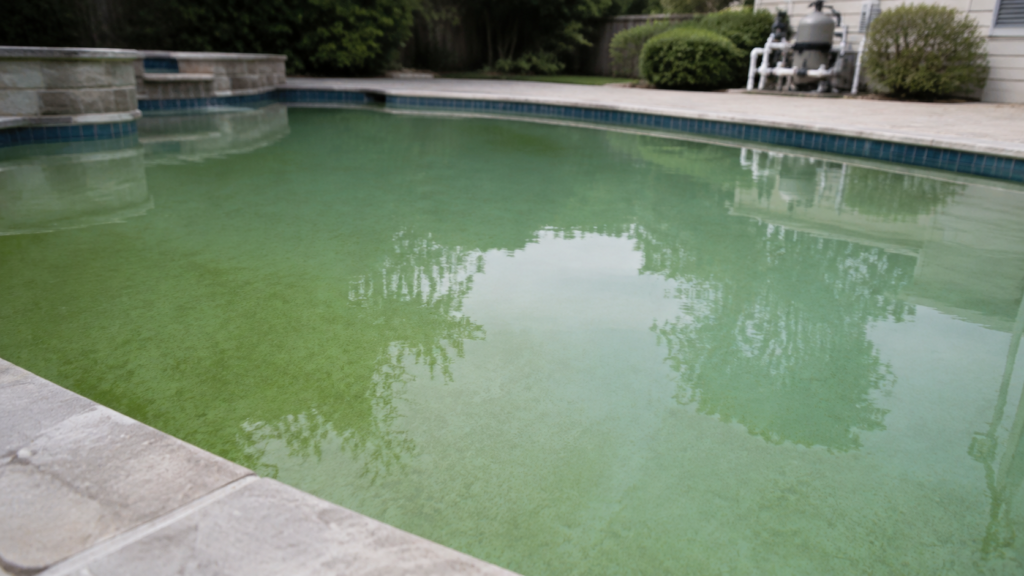
One memorable service call involved a pool with cloudy, greenish water. At first glance, it looked like a typical algae problem. But the usual checks did not point in that direction: free chlorine tested above 10 ppm, the filters were clean, and circulation was good.
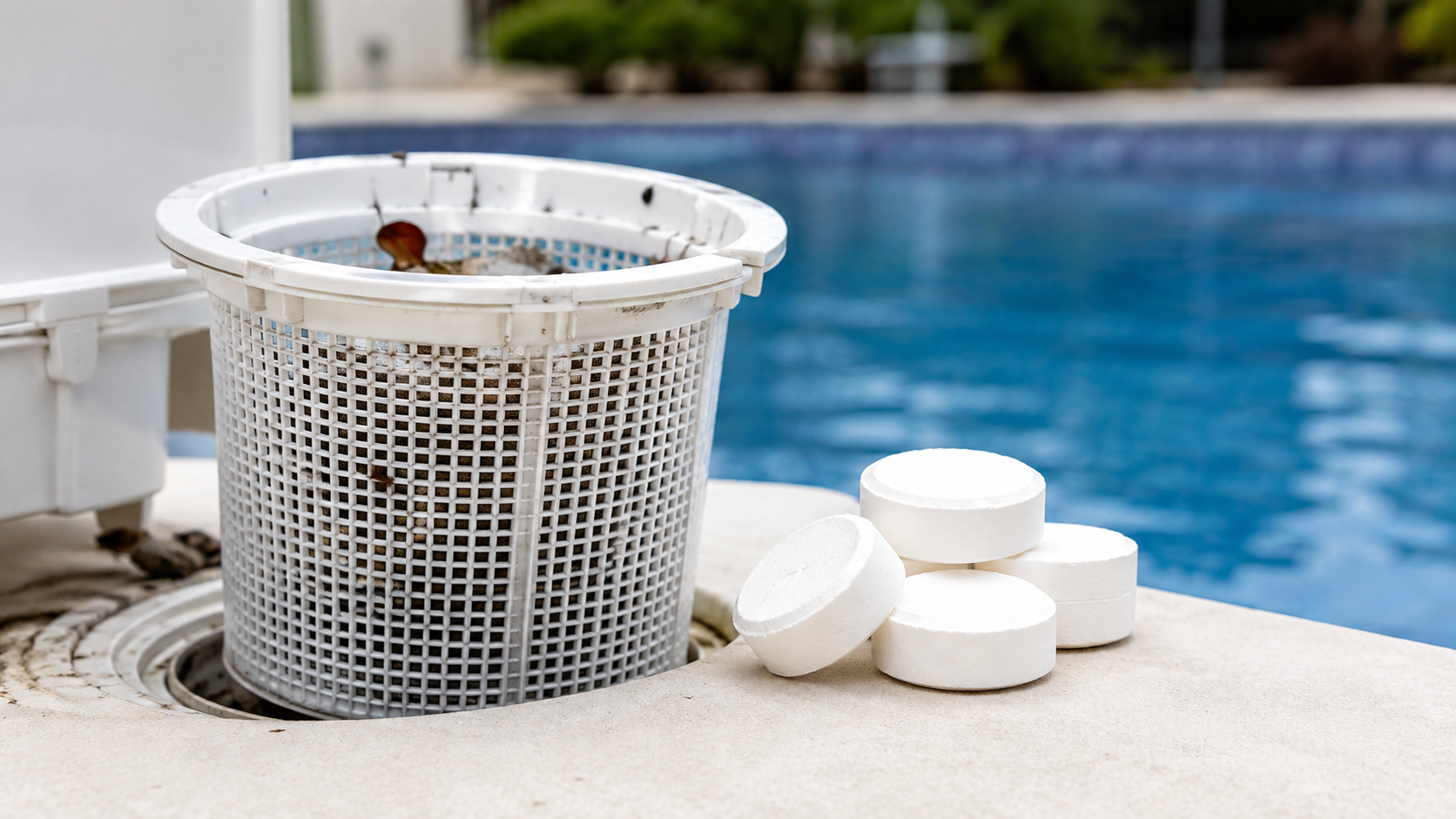
The clue was in the skimmer. I found multiple chlorine tablets sitting there. When I tested the stabilizer level, the CYA was over 150 ppm. The tablets had been adding more stabilizer while the existing level was already too high.
The practical fix was a drain and refill. I drained the water, rinsed residual CYA from the plaster surface, then refilled and balanced the chemistry from a clean baseline. The pool stayed beautiful afterward, and the homeowner became a regular service client.
That call is why I do not treat a high chlorine number as an automatic all-clear. The complete set of readings—and how the pool has been chlorinated—matters.
Test before you treat
Use a dependable liquid-reagent test kit that includes a CYA test, or have a qualified pool professional test a fresh sample. Old strips, strips left in heat or sun, and incomplete testing can send you in the wrong direction. CDC recommends routine chlorine and pH testing and notes that a DPD chlorine test can read falsely low or zero when very high chlorine bleaches the test. Follow the kit instructions and confirm any result that does not fit the pool condition.
Before changing anything, record free chlorine and combined chlorine, pH and total alkalinity, CYA, filter pressure compared with your clean baseline, and the chlorine products you have been using.
For many residential outdoor pools, CYA is maintained in a moderate range, but the right target depends on the sanitizer system, local conditions, and manufacturer guidance. Follow your test-kit, equipment, and local-health guidance rather than relying on one universal number.
How to lower high CYA
Because CYA remains dissolved in the water, simply adding another chemical usually does not solve a high-CYA problem. The practical method is usually to replace some water with fresh water.
- Confirm the test. Retest with a quality kit or professional test before planning a drain.
- Calculate the water replacement needed. A partial replacement may be enough; severely elevated CYA may require more.
- Check whether draining is safe for your pool. Groundwater, soil conditions, pool construction, and local rules all matter.
- Use a qualified pool professional when there is any doubt. This is especially important for high groundwater, vinyl-lined pools, fiberglass pools, or a full drain.
- Refill, circulate, and rebalance from fresh readings. Do not assume the old chemical settings still apply.
Never drain water where it can damage property, enter a storm drain, or violate local requirements. Never mix pool chemicals together to try to force a faster correction.
Stop CYA from creeping up again
- Test CYA routinely, especially during tablet-heavy months.
- Know whether your chlorine product adds stabilizer.
- Do not place chlorine tablets in the skimmer. They can create highly acidic, concentrated water that is hard on equipment when the pump cycles.
- Use a proper feeder or floater if tablets are appropriate for your system, and follow its instructions.
- Keep a simple log of CYA, free chlorine, pH, and the products added.
High Cyanuric Acid in a Pool FAQ
What causes high cyanuric acid in a pool?
Repeated use of products that add stabilizer—commonly trichlor tablets and dichlor granules—can raise CYA over time. Direct stabilizer additions also raise it. Splash-out, backwashing, leaks, and water replacement may lower the concentration, but ordinary filtration does not remove dissolved CYA.
Can high CYA make chlorine stop working?
Chlorine is still present, but cyanuric acid changes its availability and slows disinfection. CDC notes that disinfection times are longer in the presence of CYA. Interpret the free-chlorine result together with CYA, pH, water appearance, product guidance, and any applicable local requirements.
Will high CYA go down on its own?
Do not count on a rapid natural decline. Meaningful reduction usually comes from replacing treated water with fresh water. Retest before and after any planned replacement so the next step is based on evidence.
Can I drain the pool myself to lower CYA?
Not every pool can be drained safely. Groundwater, soil, hydrostatic pressure, pool construction, liner condition, temperature, and discharge rules can turn a routine-looking drain into a structural or environmental problem. Use a qualified pool professional when those conditions are uncertain or a large replacement is needed.
When to bring in a professional
Call a qualified pool professional if you are considering a substantial drain, cannot get consistent test results, see structural concerns, or need help deciding how much water to replace.
The bottom line
High CYA can make an otherwise well-maintained pool hard to clear. If the water looks green or cloudy while chlorine reads high, resist the urge to keep adding products. Test the stabilizer, review the chlorine source, and correct the actual cause.
Clear pool water is not about chasing one number. It comes from accurate testing, steady circulation and filtration, and chemistry that works together. Use How to Test Pool Water Accurately for a repeatable baseline, and review the Pool Equipment Glossary when flow or sanitizer-delivery equipment may be part of the problem.
Sources and review notes
Written and field-reviewed by Chris Barnes. Former Northern California pool-service company owner with more than seven years of residential and commercial experience. Last reviewed September 8, 2026. Product labels, equipment manuals, and applicable state or local requirements take priority.