
By Chris Barnes · Former pool-service company owner · 7+ years of residential and commercial experience
Pool skimmer not working? Start with the simple restrictions that commonly reduce surface flow: low water, a stuck weir door, a packed skimmer basket, a full pump basket, or a valve that is not in its normal position. Then compare filter pressure and look for suction-side air. Shut the pump off before removing a basket or opening equipment, and do not force a suspected underground blockage.
Safety first: Turn the pump off and disconnect power before opening the pump strainer. Relieve filter pressure as the manufacturer directs, keep hands and tools away from energized or pressurized equipment, and never use compressed air, drain cleaner, chemicals, or improvised tools to clear a pool line. If a suction fitting or drain cover is loose, broken, or missing, keep swimmers out and call a qualified professional.
Pool Skimmer Not Working? The Quick Answer
If your pool skimmer is not working, confirm that the water is near the middle of the skimmer opening and that the floating weir door moves freely. With the pump safely off, empty the skimmer and pump baskets. Return valves to their documented normal positions, restart according to the equipment manuals, then compare return flow and filter pressure with your pool’s normal baseline.
A skimmer that improves after one of those checks probably had a visible restriction. A pump pot that will not stay full, continuing bubbles at the returns, unusually low pressure, or one dead skimmer while the others pull normally can point to an air leak, closed valve, damaged basket, or blocked suction line.
What Healthy Skimmer Flow Looks Like
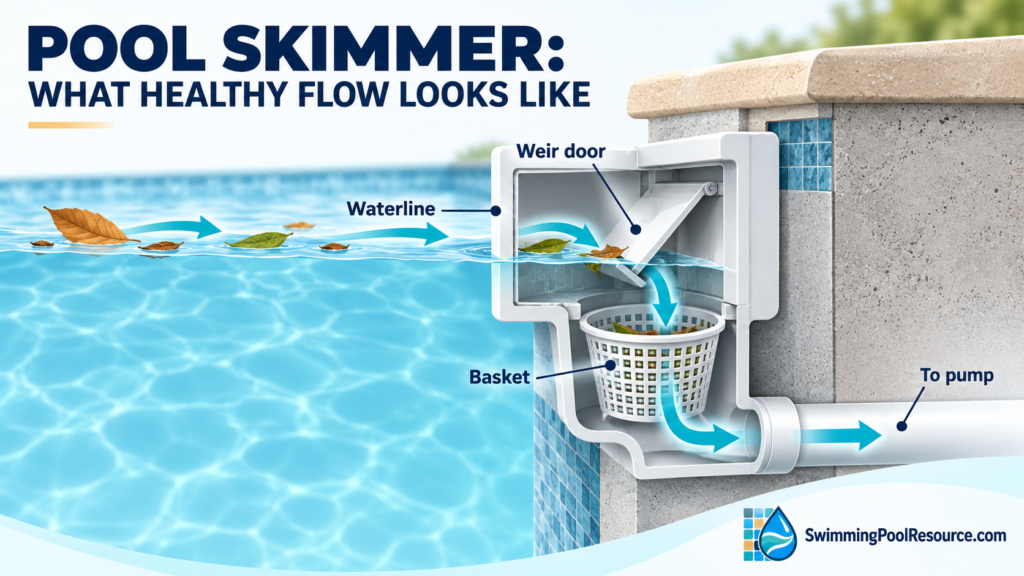
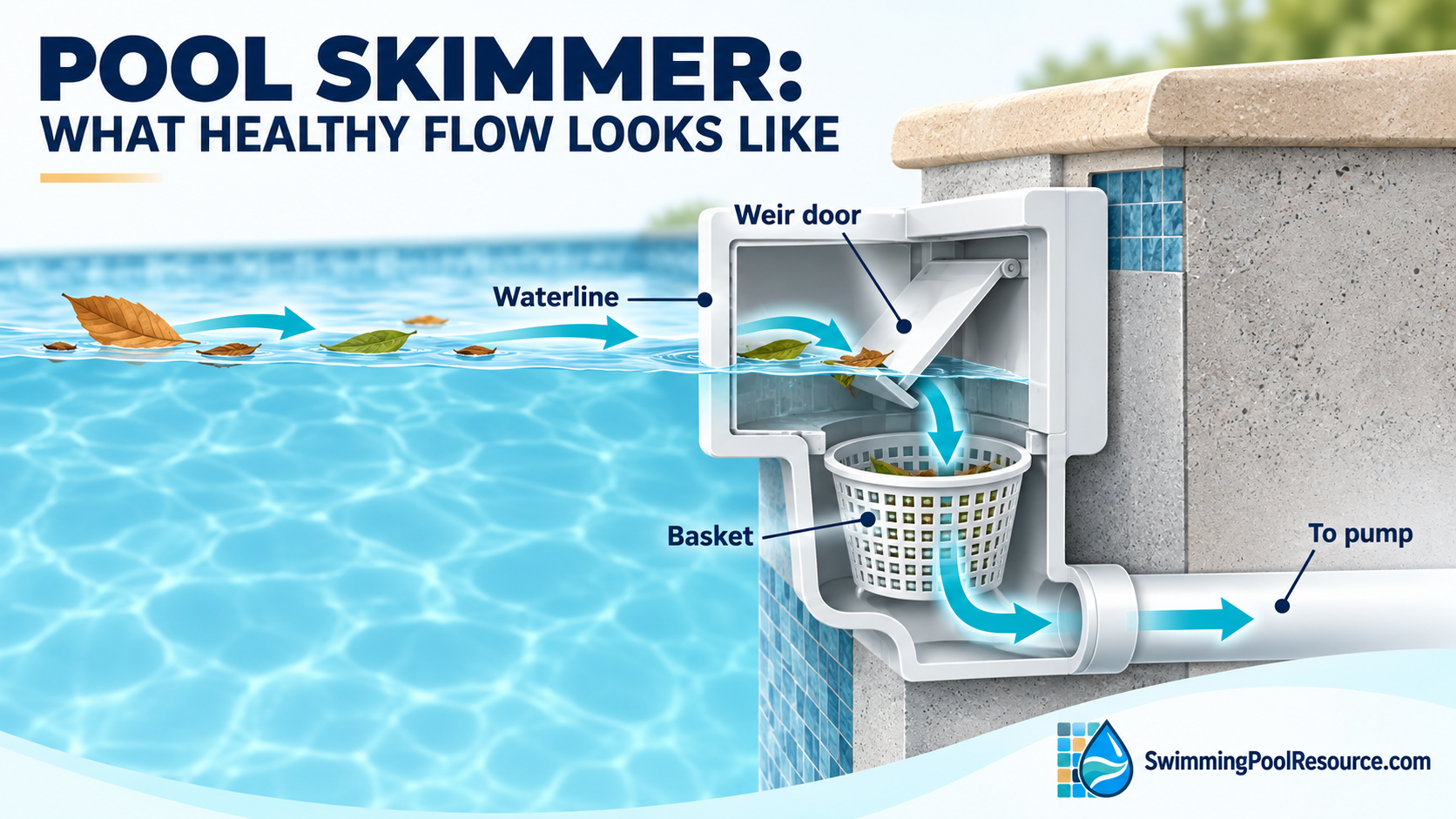
The pump pulls a thin layer of surface water over the hinged weir. Leaves and insects remain in the basket while water continues through the suction line to the pump. The Pentair U-3 skimmer guide explains that the floating weir improves surface action and calls for water at least 1½ to 2 inches above the bottom of that model’s opening. Another Pentair skimmer manual describes the practical target as approximately halfway up the opening. Your installed skimmer manual takes priority.
Do not judge a variable-speed system only by dramatic movement at the skimmer. A lower scheduled speed may produce gentler surface pull. Compare the skimmer, clear pump lid, return flow, and filter pressure at the same pump speed you normally use.
Common Symptoms and Likely Causes
| What you see | Likely causes | Best first check |
|---|---|---|
| Skimmer gurgles or pulls a vortex | Water too low, stuck weir, excessive suction to that line | Raise water to the normal skimmer level and free the weir with the pump off |
| Leaves float past the opening | Weak surface flow, high water, missing/stuck weir, return direction, low pump speed | Confirm the waterline and weir, then compare normal speed and valve position |
| Pump basket contains persistent air | Low water, clogged skimmer, lid seal leak, loose suction union, suction-line leak | Correct water and baskets, then inspect the pump lid and visible suction side |
| All skimmers and returns are weak | Full baskets, dirty filter, wrong valve position, lost prime, pump or impeller problem | Check the entire circulation path and filter pressure |
| One skimmer is weak; another is normal | Individual valve setting, damaged basket, local weir problem, partial line blockage | Compare the two skimmers with the system at the same setting |
| Filter pressure is higher than the clean baseline | Restriction after the pump, often a loaded filter or return-side issue | Follow the filter manual; do not assume the skimmer line is blocked |
| Filter pressure is unusually low | Restricted intake, suction air, wrong valve position, low speed, pump issue | Check water, baskets, valves, prime, and visible air |
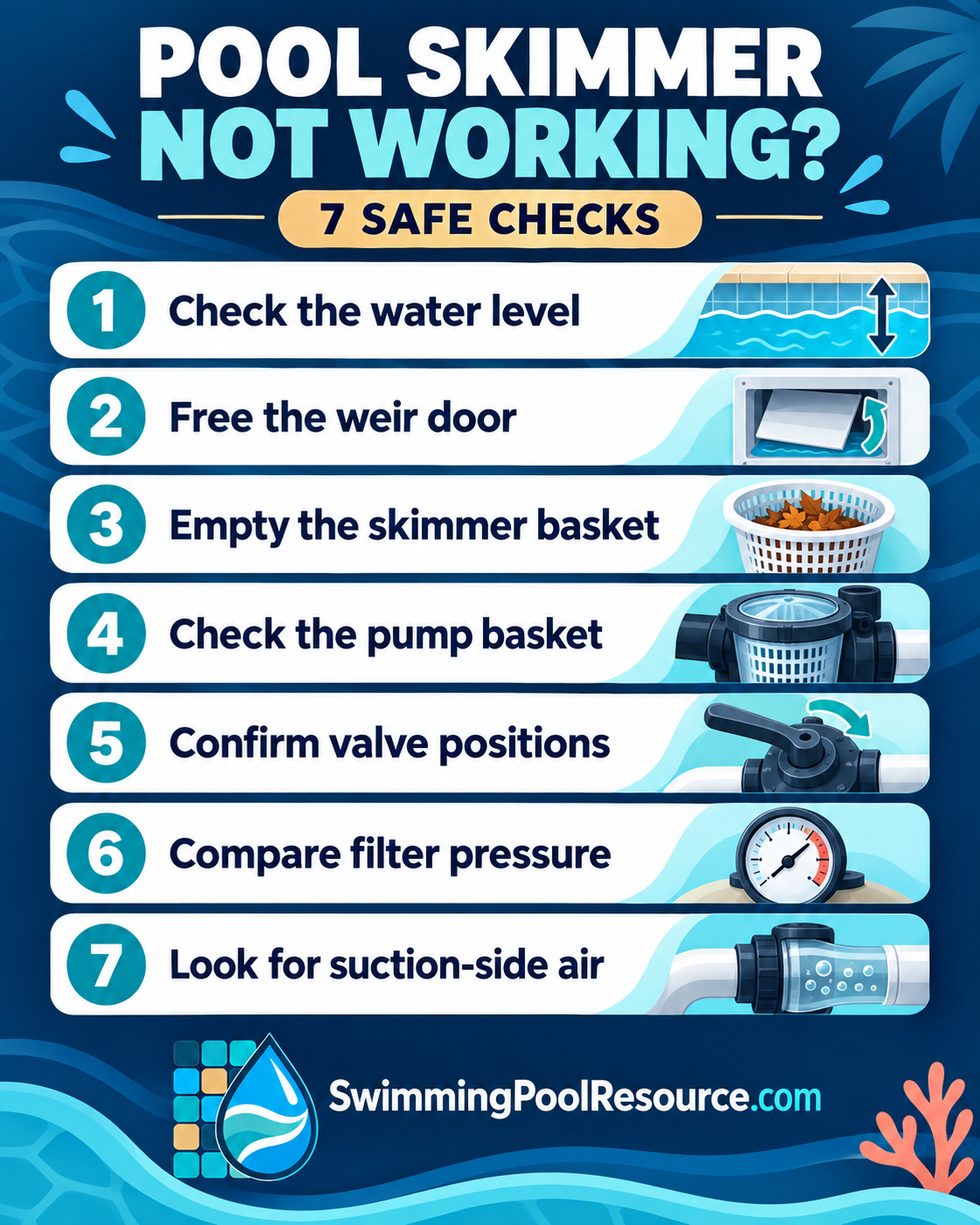
7 Safe Checks When a Pool Skimmer Is Not Working
1. Check the Water Level
Water that is too low can let the skimmer pull air and make the pump lose prime. Water that is near the top of the opening can reduce the thin surface draw that carries debris over the weir. Restore the normal level for your skimmer before changing equipment settings. If the level keeps falling, use the pool leak and evaporation guide.
2. Make Sure the Weir Door Moves Freely
Turn the pump off. The hinged flap should pivot without binding and should not be jammed closed by a toy, leaf, warped part, or swollen foam insert. A missing or permanently flat weir can weaken surface skimming even when total circulation is adequate. Replace damaged parts with components made for the exact skimmer model.
3. Empty and Inspect the Skimmer Basket
A basket can look only partly full from above while needles and fine leaves have formed a dense mat below the surface. Remove it with the pump off, clean it, and check for splits, missing handles, and gaps that let debris enter the pipe. Reinstall it securely before restarting.
4. Check the Pump Basket and Prime
Shut off power and relieve pressure before opening the pump housing. Empty the basket, clean the lid sealing surface, inspect the O-ring, and reassemble the pump exactly as its manual directs. If the pump lost prime, follow the safe pool-pump priming procedure rather than letting it run dry.
5. Confirm Valve Positions
Compare suction and return valves with a photo or label from normal operation. A partially closed skimmer valve can make one line look blocked. On multi-skimmer pools, valve balance affects how much each opening pulls. Stop the pump before moving any multiport filter valve, and never create a closed suction or return path.
6. Compare Filter Pressure With the Clean Baseline
Use the same pump speed and valve configuration every time you compare readings. Pressure well above your clean baseline generally points to resistance after the pump, such as a loaded filter or restricted return path. Unusually low pressure can accompany restricted intake, lost prime, or suction air. The pool filter guide explains why your own clean reading is more useful than a universal target.
7. Look for Suction-Side Air
Watch the clear pump lid and pool returns at the normal operating speed. A pot that repeatedly drains or a continuing stream of return bubbles can mean air is entering before the impeller. Recheck the water level, weir, baskets, pump-lid O-ring, drain plugs, unions, and visible suction plumbing. Do not use an open flame or pressurized air to search for a leak.
From Chris’s Service Route: Redwood Branches Past a Broken Basket
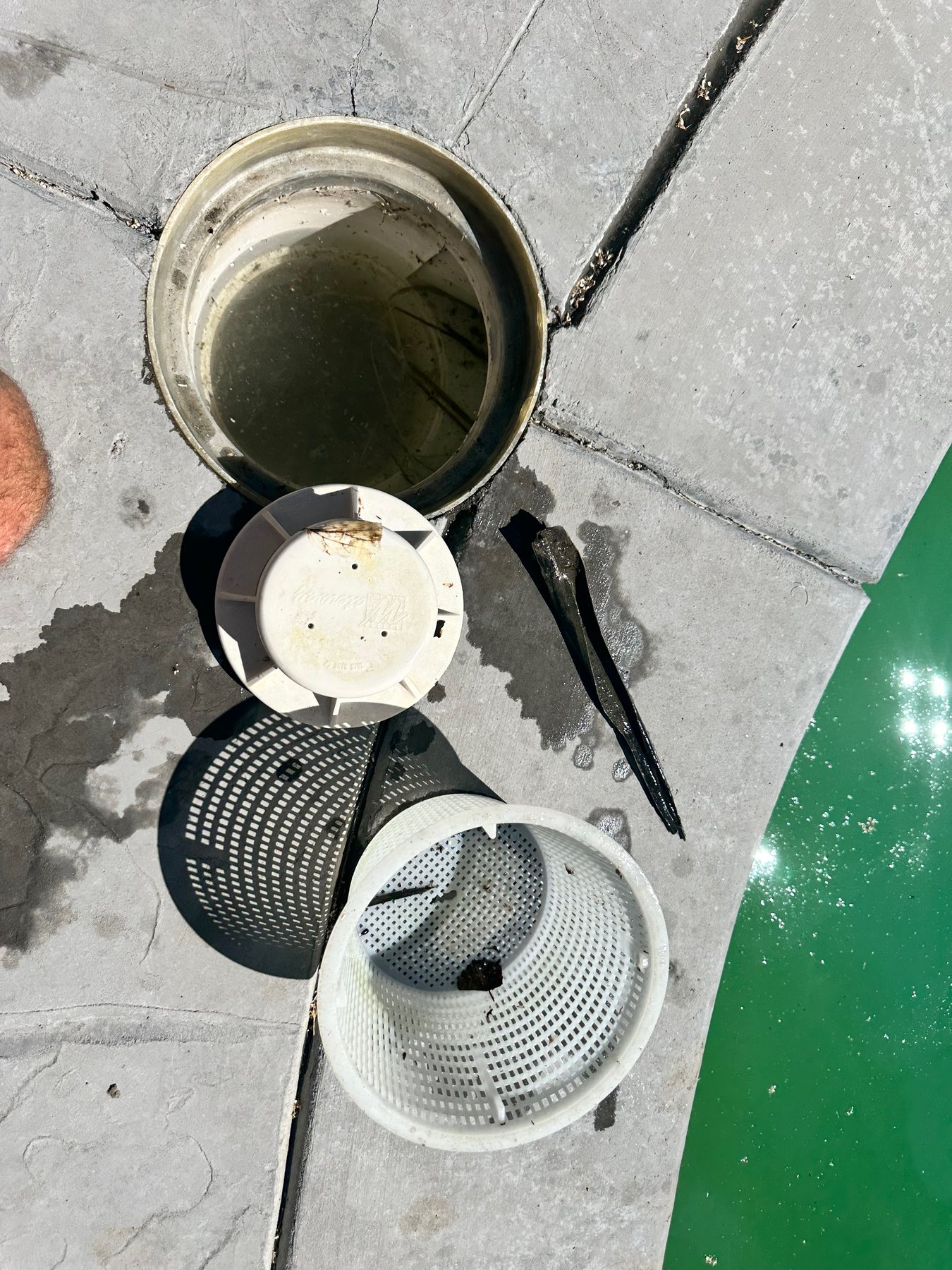
One weak-skimmer call looked simple until I lifted the basket. Redwood branches had damaged it and slipped into the suction line. The pump still moved some water, but the skimmer could not pull normally because debris was lodged farther into the line.
I worked from the equipment side and carefully moved the obstruction back toward the skimmer, where it could be removed. Then I replaced the damaged basket so the same material could not pass through again. The result was normal skimmer flow without digging up plumbing.
The lesson is diagnostic, not an instruction to improvise a line-clearing method. Confirm the inexpensive, visible causes first, and treat a damaged basket as part of the failure—not just the debris that got past it. Clearing a suction line requires the right access, controlled equipment, and knowledge of the plumbing layout.
What Filter Pressure Can—and Cannot—Tell You
Filter pressure is measured after the pump, so it does not identify one exact obstruction by itself. Read it as part of a pattern:
- High pressure plus weak returns often suggests a dirty filter, closed return valve, or restriction after the pump.
- Low pressure plus air under the pump lid often suggests inadequate water reaching the pump because of low water, a blocked basket, a valve problem, or suction air.
- Normal pressure but poor surface cleaning can point back to the weir, water height, wind direction, return aim, individual valve balance, or pump schedule.
Use the pool troubleshooting hub if the symptom extends beyond one skimmer.
When Not to Force a Suspected Blockage
Stop after the visible checks if the line still appears blocked. Do not feed wire, a drain snake, caustic drain cleaner, acid, chlorine, or another chemical into pool plumbing. Do not seal a garden hose to the suction line or use compressed air. Excess pressure can damage fittings, separate plumbing, create flooding, or turn trapped parts into projectiles.
Pool and spa suction systems also carry entrapment hazards. The U.S. Consumer Product Safety Commission warns that broken, loose, or missing drain covers require immediate closure and professional repair. Never remove a suction cover while swimmers are present or the system can energize.
When to Call a Pool Professional
Call a qualified pool professional when one skimmer remains dead after the safe checks, the pump repeatedly loses prime, the line may be obstructed, a valve is broken, the housing or plumbing is cracked, or the filter gauge behaves abnormally. Shut the system down and get prompt help for electrical trouble, a burning smell, a severely noisy or overheating motor, leaking pressurized equipment, a damaged suction fitting, or flooding.
Before the visit, record the pump speed, clean filter pressure, current pressure, water level, valve positions, when the problem began, and whether the behavior changes when another suction line is adjusted. Photos of the skimmer, pump lid, valves, and gauge can shorten the diagnostic process.
Pool Skimmer Not Working: Common Questions
Why is my pool skimmer not pulling water?
The most common starting points are low water, a stuck weir, a clogged or broken basket, a closed valve, lost pump prime, suction-side air, or a blocked line. Check them in that order so you do not mistake a system-wide flow problem for a skimmer failure.
Where should the pool water level be?
Approximately halfway up the skimmer opening is a useful visual rule for many residential skimmers, but the installed manufacturer’s guide controls. Pentair manuals for common models describe either a midpoint target or a minimum 1½ to 2 inches above the bottom of the opening.
Should the skimmer weir door move?
Yes. With the pump off, the hinged door should pivot freely. During operation, surface water flows over it. A stuck, warped, missing, or incorrectly installed weir can reduce skimming or allow the skimmer to draw air.
Can a dirty filter make the skimmer look weak?
Yes. A loaded filter can reduce total circulation, so every skimmer and return may appear weak. Compare the gauge with the clean baseline at the same pump speed and follow the filter manufacturer’s cleaning instructions.
Can I unclog a skimmer line myself?
Homeowners can safely remove visible debris from an accessible basket with the pump off. A suspected line blockage is different. Do not use chemicals, compressed air, or improvised tools; a qualified pool professional can isolate the line and choose a method appropriate to the plumbing.
The Bottom Line
When a pool skimmer is not working, begin with water level, the weir, both baskets, valve positions, filter pressure, and visible suction-side air. Those checks separate a simple maintenance restriction from a priming, filtration, plumbing, or pump problem. Make one change at a time, protect the pump from dry running, and leave inaccessible suction-line work to a qualified professional.
Sources and Review Notes
Written and field-reviewed by Chris Barnes. Former Northern California pool-service company owner with more than seven years of residential and commercial experience. Last reviewed September 9, 2026. Equipment manuals, product labels, building requirements, and applicable local rules take priority.