
By Chris Barnes · Former pool-service company owner · 7+ years of residential and commercial experience
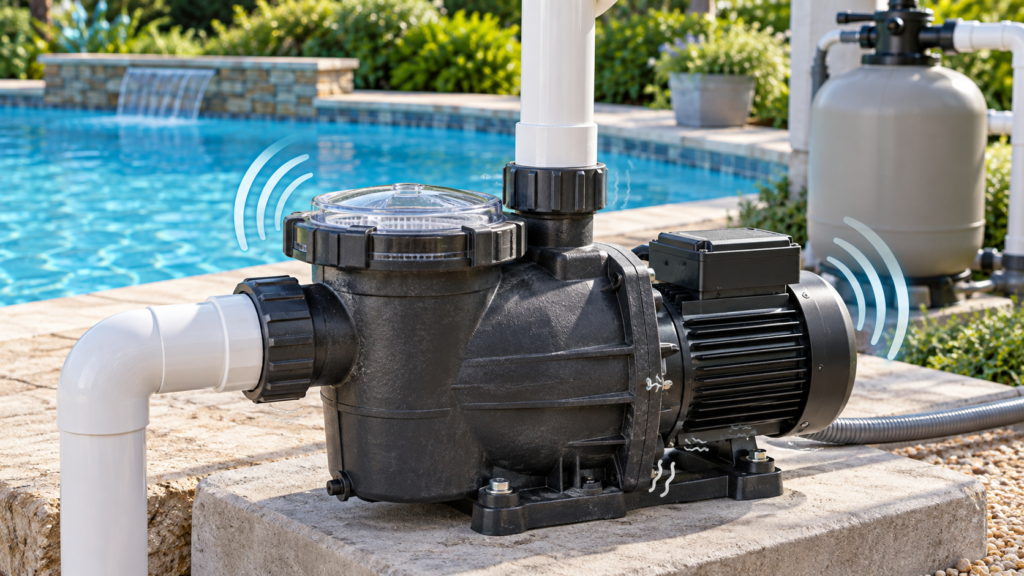
If your pool pump is making noise, the sound itself is a useful clue—but its location, timing, and effect on water flow matter just as much. A gravel-like growl often points toward cavitation or a suction restriction. Rattling may be debris or vibration. A high-pitched squeal can come from bearings or mechanical contact. A motor that only hums may be jammed or have an electrical problem.
Safety first: Shut the system off immediately if you smell burning, see smoke or sparks, find water near electrical parts, hear severe grinding, or the breaker trips. Turn power off before opening the pump basket or reaching near the motor and fan. Do not remove electrical covers or repeatedly reset a breaker. Electrical, internal motor, pressure-vessel, and serious mechanical repairs belong to a qualified professional.
Pool Pump Making Noise: The Quick Answer
For any pool pump making noise, first decide whether the sound comes from the motor, the pump’s wet end, the plumbing, or the control/drive. Note whether it begins at startup, only at high speed, after the pump has run for a while, or when a valve changes position. Then check the simple external causes: pool water level, skimmer and pump baskets, valve positions, visible air under the pump lid, loose supports, and anything touching the motor’s cooling area.
Do not assume every loud pump needs a new motor. Pentair troubleshooting guidance lists suction-line air leaks, clogged baskets, a restricted or clogged impeller, debris near the cooling fan, inadequate pipe support, and cavitation among possible causes of abnormal noise. The safest first goal is to separate a flow problem from a motor or electrical problem.
Where Is the Noise Coming From?
| Where it sounds loudest | Common clues | Safe first checks |
|---|---|---|
| Pump wet end or clear-lid area | Gravel-like growl, rattling, air bubbles, changing flow | Water level, baskets, valves, lid seal, visible suction leaks |
| Motor or rear cooling area | Hum, squeal, grinding, fan noise, excess heat | Shut off; look for external debris without removing a cover |
| Pipes, unions, or equipment base | Vibration, drumming, buzzing that changes when touched nearby | Loose supports, contact points, cracked base, leaking unions |
| Drive, relay, timer, or electrical panel | Electrical buzz, chatter, repeated clicking, fault code | Shut off; record the displayed code; use a qualified electrician or service professional |
With a pool pump making noise, listen from a safe distance and never put a hand on wet, hot, moving, or energized equipment. A short phone recording can help a technician, especially if it captures the sound at startup and at the speed where it becomes loudest.
8 Pool-Pump Sounds and What They May Mean
1. A New or Suddenly Louder Sound
A pool pump making noise suddenly deserves attention; the change matters more than whether the pump was always fairly loud. Stop the system if the new noise is severe, metallic, accompanied by leaking, or followed by reduced flow. Write down what changed: recent basket cleaning, a valve adjustment, a clogged skimmer, a storm, a repair, a speed-program change, or low pool water.
If the pump still moves water normally and the sound is mild, compare it at the same programmed speed and valve position. Variable-speed pumps naturally sound different as RPM changes, so a fair comparison uses the same operating condition.
2. Humming but Not Starting
A motor that hums without turning can have a jammed impeller, failed bearing, voltage problem, start-component problem, or internal motor fault. Turn it off instead of repeatedly cycling it. A stalled motor can overheat quickly.
With power off, check only the easily accessible pump basket for obvious debris and verify that the equipment is not frozen. Do not probe inside the impeller opening, remove the motor cover, or test energized wiring unless you are qualified and following the exact manufacturer procedure.
3. Grinding, Screeching, or High-Pitched Squealing
These sounds often point toward worn bearings, a damaged rotating component, debris contacting the impeller or fan, or mechanical contact inside the motor/pump assembly. Pentair manuals also note that some squeaking during startup or slowdown can involve the motor slinger or shaft-seal area, but persistent or worsening squealing still deserves inspection.
Shut the pump down if the noise is harsh, the motor is unusually hot, the shaft area is leaking, or the sound worsens rapidly. Continuing to run damaged bearings or a rubbing component can turn a focused repair into a larger failure.
4. Rattling, Clicking, or Ticking
A pool pump making noise with a rattle may have loose hardware, a vibrating pipe, debris in the pump basket, material near the impeller, or debris near the motor’s cooling fan. A pump mounted on a cracked or uneven base may transmit a small vibration into a much louder cabinet-like sound.
Turn off power before checking the basket or removing external leaves and twigs from around ventilation openings. Look for a pipe or conduit touching a wall, heater, fence, or other equipment. Do not wedge combustible padding against a motor or block airflow in an attempt to quiet it.
5. Gravel, Marbles, or a Growling Sound
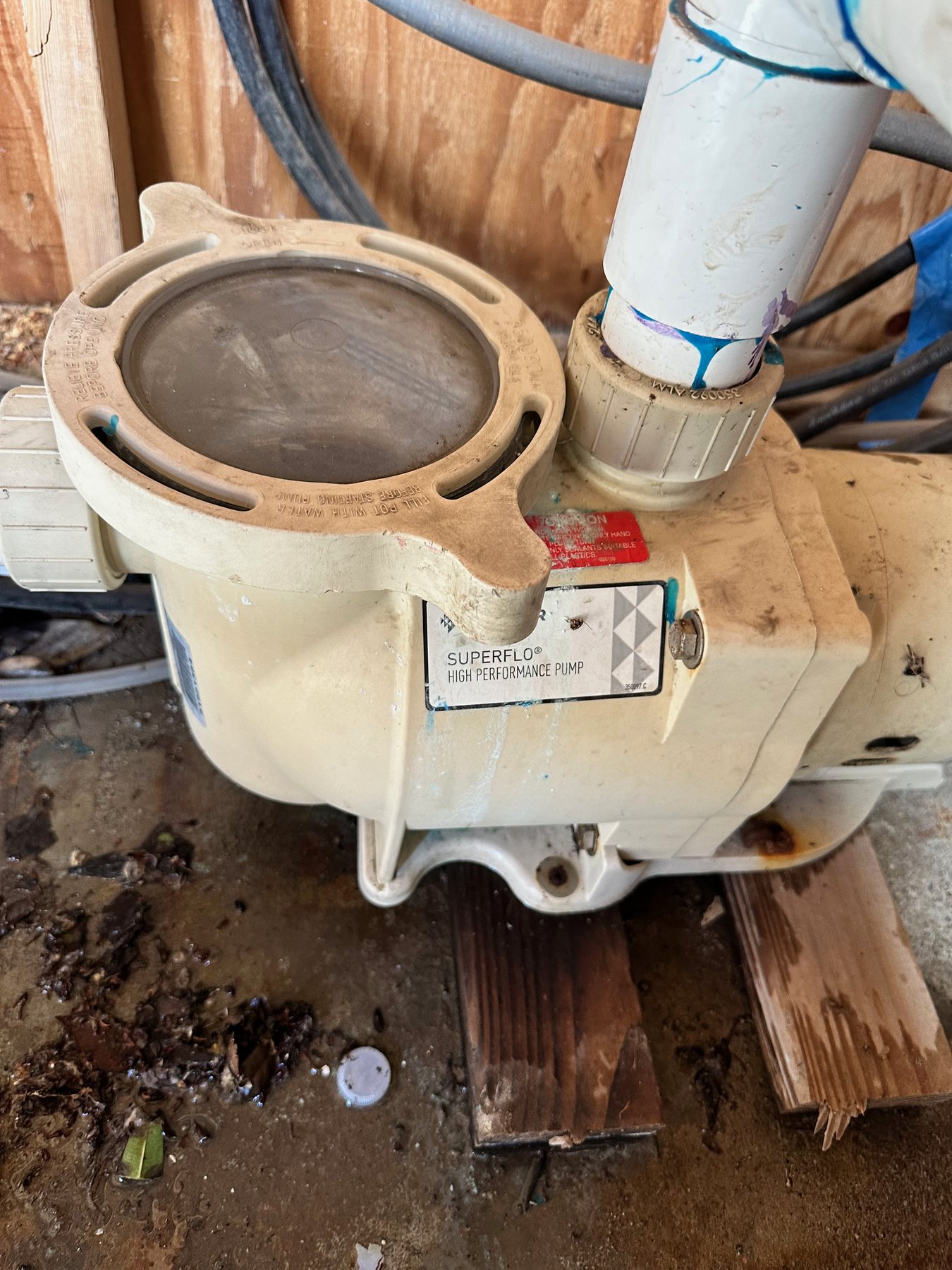
A pool pump making noise like gravel often suggests cavitation: vapor pockets form where pressure is too low and then collapse as pressure rises. Manufacturer guidance warns that severe cavitation can damage an impeller and other pump components.
Common contributors include a clogged skimmer or pump basket, low water level, a stuck weir door, a valve that is partly closed, a restricted suction line, an air leak on the suction side, an undersized or poorly configured pipe, or a speed that is too high for the available flow path. Clear the basic restrictions with power off. If the growl remains, reduce unnecessary high-speed operation and have the system evaluated.
6. Gurgling, Slurping, or Surging
A pool pump making noise with gurgling near the skimmer or bubbles under the lid usually means air is entering the circulation path. Check whether the pool water is high enough to cover the middle of the skimmer opening, whether the skimmer weir moves freely, and whether a full basket is creating a vortex.
With the pump off, inspect the pump-lid O-ring and accessible suction-side unions for dirt, damage, or looseness. Never tighten a clear lid or plastic union with excessive force. If the pump will not fill and hold prime, use the pool-pump guide for first-time owners and trace the suction path before running it dry.
7. Electrical Buzzing, Chattering, or Repeated Clicking
A pool pump making noise with electrical buzzing or chatter from a timer, relay, drive, disconnect, or panel is not a normal water-flow problem. Turn the equipment off and keep the area dry. Record any error code displayed on a variable-speed drive, but do not remove a panel or test live voltage unless you are qualified.
Call a qualified electrician or pool professional if a breaker trips, controls cycle repeatedly, the pump starts unpredictably, wiring smells hot, or the sound comes from an electrical enclosure. Do not solve a repeated trip by installing a larger breaker.
8. Vibration, Drumming, or Resonance
A pool pump making noise through vibration can operate normally yet make the surrounding pad, pipe, fence, or enclosure amplify the sound. Manufacturer troubleshooting information specifically lists inadequate piping support as one possible cause of loud pump noise.
Inspect the mounting base, anchors, pipe supports, conduit, and nearby surfaces with power off. Look for cracks, gaps, a pipe resting against another component, or a loose cover. Any vibration-isolation product must be rated for the equipment and installed without stressing the plumbing, trapping water, or restricting motor ventilation.
A Safe 10-Minute Noise Check
- Listen without touching: identify the loudest area and record the sound.
- Note the operating condition: startup, scheduled speed, cleaner mode, spa mode, heater operation, or valve position.
- Check the water level: confirm the skimmer is not drawing air.
- Shut off power: wait for all moving parts to stop before opening the pump basket.
- Clean the baskets: remove debris from the skimmer and pump basket and reinstall the lid correctly.
- Inspect visible seals and unions: look for air, water, dirt, cracks, or a displaced O-ring.
- Confirm valve positions: compare them with the normal operating setup; never move a multiport valve with the pump running.
- Look for vibration: inspect external supports, contact points, mounting hardware, and ventilation openings.
- Restart only if safe: prime according to the exact pump manual and observe from a safe distance.
- Stop if the symptom remains severe: save the recording, model number, speed, pressure reading, and fault code for a professional.
The pressure gauge can add context. Compare it with the clean-filter baseline, not an arbitrary internet number. Low pressure plus air or surging points toward a suction or priming problem; abnormally high pressure suggests a return-side restriction or dirty filter. Read the pool-filter pressure guide before changing anything.
Should You Repair or Replace a Noisy Pool Pump?
Repair can make sense when the pump housing is sound, replacement parts remain available, the failure is isolated, and the rest of the system is correctly sized. A clogged impeller, damaged lid seal, loose support, or serviceable bearing problem does not automatically require a complete new pump.
Replacement deserves consideration when the housing is cracked, the motor and wet end both need major work, the pump is badly corroded, important parts are obsolete, or the existing single-speed pump is inefficient or poorly matched to the pool. Compare the full installed cost, controls compatibility, plumbing changes, warranty, expected efficiency, and local code or energy requirements—not only the pump price.
Before requesting parts or a quote, capture the complete pump housing and motor/drive labels. The pool-pump model-number guide explains exactly which photos and numbers to collect.
Noisy Pool Pump: Common Questions
Why is my pool pump louder at high speed?
A pool pump making noise more noticeably at high speed may be reacting to increased water velocity, motor load, or a restricted suction path that begins to cavitate. A modest sound increase may be normal, but a gravel-like growl, surging flow, or visible air is not. Clean the baskets, verify valves and water level, then compare the pump at a lower programmed speed if the manufacturer allows it.
Can a dirty pool filter make the pump noisy?
It can change flow and system pressure, but not every noisy-pump problem begins at the filter. Compare the filter gauge with its clean baseline. A clogged suction basket or blocked suction line can cause low flow and cavitation before water ever reaches the filter.
Can I keep running a squealing pool pump?
Persistent squealing should not be ignored. Shut the pump off if the sound is new, loud, worsening, paired with leaking, or accompanied by excess heat. Running a failing bearing or rubbing component may cause more damage.
How can I make a pool pump quieter?
Correct the cause before adding sound barriers. Clean restrictions, repair air leaks, support pipes, remove external debris, and use appropriate programmed speeds. Any enclosure must preserve the clearance and ventilation required by the manufacturer. Never cover the motor or block its cooling airflow.
The Bottom Line
A pool pump making noise is easiest to diagnose when you match the sound to its location and operating condition. Check water level, baskets, valves, visible air, supports, and external debris first. Stop immediately for electrical buzzing, repeated breaker trips, burning odor, severe grinding, leaks near the motor, or abnormal heat.
For the next step, visit the pool troubleshooting hub, learn the parts in the pool-equipment glossary, or send a short sound recording and equipment-label photos through Ask Chris.
Sources and Review Notes
Written and field-reviewed by Chris Barnes. Former Northern California pool-service company owner with more than seven years of residential and commercial experience. Last reviewed September 10, 2026. The manual for the exact installed pump, current manufacturer instructions, and applicable electrical and building requirements take priority.
- Pentair: EQ Series Commercial Plastic Pumps Installation and User’s Guide
- Pentair: WhisperFloXF and Max-E-ProXF VS Pump Installation and User’s Guide
- Pentair: IntelliFlo3 and IntelliPro3 VSF Pump Installation and Maintenance Guide
- Pentair: Seven Servicing Tips for Variable-Speed Pumps
- Pentair Sta-Rite: Engineering and Design Manual