
By Chris Barnes · Former pool-service company owner · 7+ years of residential and commercial experience
Learning how to vacuum a pool manually is mostly about keeping air out of the hose and debris out of the plumbing. Assemble the correct vacuum head, pole, hose, and skimmer adapter; remove large debris first; completely fill the hose with water; connect it according to your skimmer and equipment manuals; then vacuum slowly in overlapping passes while watching pump prime, water level, and filter pressure.
Safety first: Keep swimmers out while vacuuming. Turn the pump off before removing baskets, reaching into a skimmer, connecting or disconnecting suction equipment, or changing valves unless the exact equipment manual directs otherwise. Never reach into an active suction opening. Do not use a pool with a loose, broken, or missing drain or suction-fitting cover. Shut the system down and call a qualified professional for damaged suction fittings, electrical problems, a pump that will not remain primed, or plumbing you cannot identify.
How to Vacuum a Pool: The Quick Answer
Attach the vacuum head to a telescopic pole and connect the correct hose. Lower the head into the pool, then completely flood the hose so no air remains. With the pump safely off when making the suction connection, attach the hose through the correct vacuum plate, adapter, or dedicated port described in the equipment manual. Restart and vent the filter as directed, confirm steady suction, and move the head slowly across the floor in overlapping lines.
Stop if the pump pot begins to empty, returns spit large bursts of air, the hose repeatedly collapses, the cleaner sticks hard to the surface, or the filter pressure moves outside its normal pattern. Correct the underlying flow problem before continuing.
What You Need to Vacuum a Pool Manually
- Telescopic pole: long enough to reach the entire floor without unsafe stretching.
- Manual vacuum head: compatible with the pool finish and pole.
- Vacuum hose: long enough to reach from the connection point to the farthest corner with modest slack.
- Correct connection: a model-compatible skimmer vacuum plate, adapter, regulator, or dedicated vacuum-port fitting.
- Optional leaf canister: useful when large leaves could quickly fill the skimmer or pump basket.
- Leaf rake: for material too large or heavy to send through the suction system.
- Your manuals: for the skimmer, pump, filter, heater, valves, and vacuum accessories.
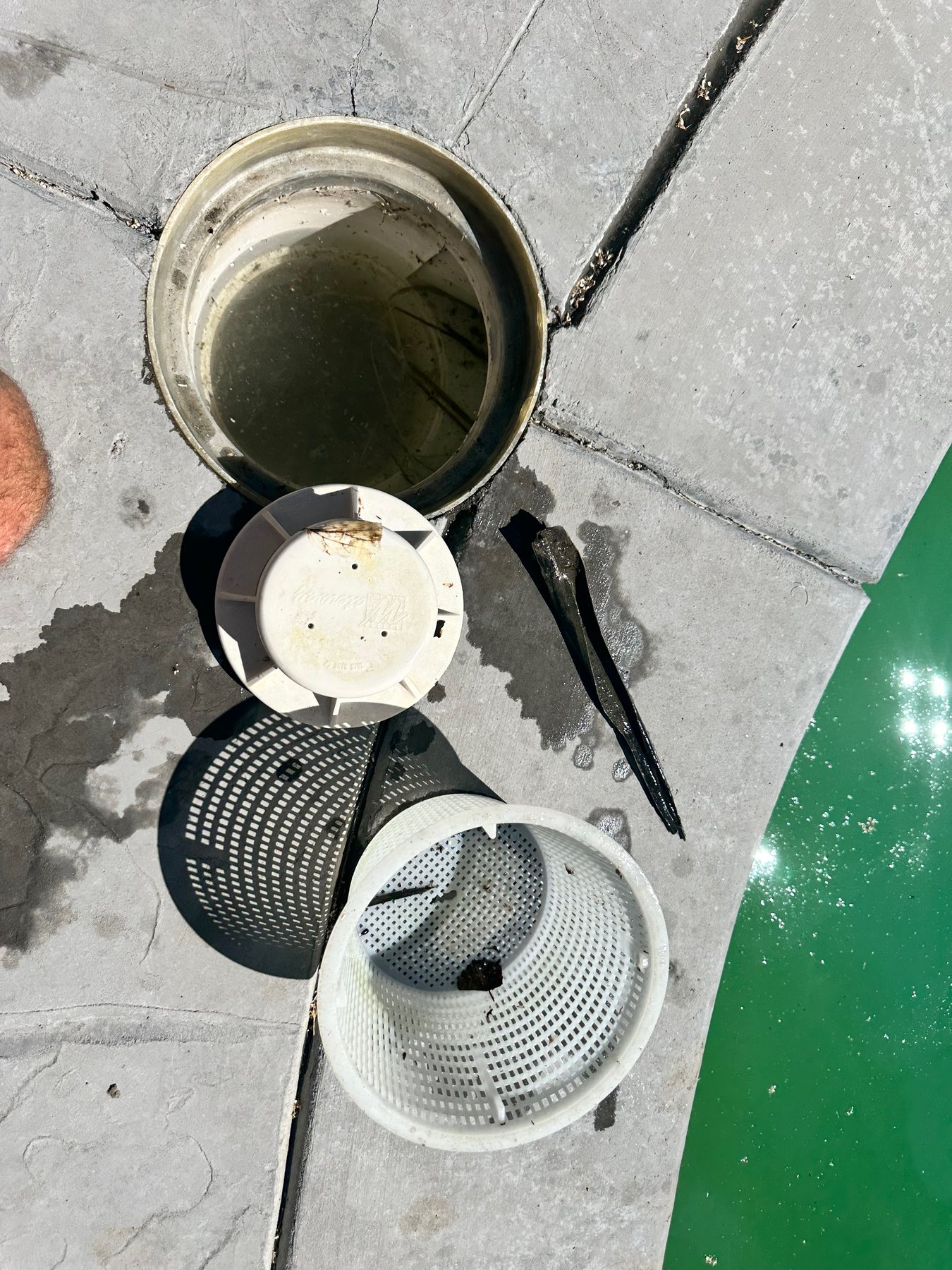
A vacuum plate can keep the skimmer basket in place, but it must fit the skimmer and be installed as the manufacturer directs. Pentair’s U-3 skimmer instructions, for example, describe refitting the basket and placing the vacuum plate above it before connecting a water-filled hose. Your skimmer may use a different arrangement.
How to Vacuum a Pool Manually in 9 Steps
1. Identify the Suction Path Before Moving Anything
Confirm whether the vacuum connects through a skimmer plate, directly to a skimmer fitting, or through a dedicated vacuum port. Photograph the normal valve positions. Do not connect a hose to an unidentified submerged fitting or remove a drain cover. If the plumbing is unclear, stop and get qualified help.
2. Check the Water Level, Baskets, and Filter
The water should be at the normal operating level for the skimmer. Turn the pump off, then empty the skimmer basket, pump basket, and leaf canister. Confirm the pump can prime normally and compare the filter gauge with the clean baseline at the same speed.
A nearly full basket or heavily loaded filter may allow the vacuum to start strongly and fade a few minutes later. Correct known restrictions before adding another one to the suction path.
3. Remove Large Debris First
Use a leaf rake for sticks, clusters of leaves, toys, stones, and other material that could block the head, hose, skimmer, or pump. Manual vacuuming works best on settled dirt and manageable debris—not objects that barely fit through the opening.
4. Assemble and Lower the Vacuum Head
Attach the head securely to the pole and connect one end of the hose to the head. Lower the head until it rests flat on the pool floor. Keep the free end of the hose above water only until you are ready to remove the air.
5. Fill the Entire Hose With Water
Flood the hose using the method approved for your setup. One common approach is to feed the hose vertically into the water, section by section, so air rises out of the free end. Another is to hold the free end near a return fitting while keeping the vacuum head submerged. Do not seal the hose against a return or create an unsafe pressure connection.
When bubbles stop and the hose is full, keep the free end submerged. A hose full of air can cause the pump to lose prime and send a large burst of air through the filter and returns.
6. Make the Suction Connection Safely
Turn the pump off before placing your hands in the skimmer or making the connection. Install the basket, vacuum plate, adapter, regulator, or dedicated-port fitting in the exact order shown in the manual. Keep the hose submerged while connecting it so air does not re-enter.
Do not force a hose onto a fitting, remove a safety cover, or improvise a sealed connection. Keep fingers, hair, clothing, and jewelry away from all suction openings.
7. Restart, Vent Air, and Confirm Steady Flow
Open the required suction and return path, stand clear of the filter, and restart the system according to the pump and filter manuals. Vent trapped air through the manual air-relief valve as directed. Confirm the pump pot stays mostly full, the returns are steady, and the vacuum head has useful—but not excessive—suction.
If the pump does not establish prime promptly, shut it down. Use the pool-pump priming guide rather than letting the pump run dry.
8. Vacuum Slowly in Overlapping Passes
Move the head slowly enough that sediment enters the vacuum instead of billowing into the water. Use straight, overlapping passes and work from cleaner areas toward heavier debris. Keep the head flat and the hose free of sharp bends.
Pause to empty baskets or the leaf canister whenever suction falls. Watch the water level during a long session—especially when vacuuming to waste—and stop before the skimmer begins pulling air.
9. Shut Down and Restore Normal Operation
Turn the pump off before disconnecting the hose, opening baskets, or changing a valve. Remove the vacuum equipment, empty the baskets and canister, restore the skimmer components and documented valve positions, and return any heater, salt system, automation, or pump schedule to normal.
Restart and vent the filter as directed. Confirm normal prime, return flow, and filter pressure. Rinse the vacuum head and hose with fresh water, inspect the cuffs for splits, let the hose dry out of direct sun, and store it without tight coils that can create permanent bends.
Should You Vacuum to the Filter or to Waste?
| Setting | What happens | When it may fit | Main caution |
|---|---|---|---|
| Filter | Vacuumed water passes through the filter and returns to the pool | Routine dirt and manageable debris | The filter may load quickly and require cleaning |
| Waste | Vacuumed water bypasses the filter and leaves the system | Some heavy sediment, flocculated material, or debris the filter should not receive—only when the equipment manual permits it | Water level can fall quickly; discharge must be legal and directed safely |
Only filters with the proper valve and plumbing can vacuum to waste. Turn the pump off before moving a multiport valve. Confirm the waste line is open, secure, and directed to an approved location. Never move the valve while the pump is running, and never allow the pump to pull air as the pool level falls.
Why Does My Pool Vacuum Have Weak Suction?
- Air remains in the hose or a hose cuff is loose.
- The water level is too low or the skimmer is drawing a vortex.
- The vacuum head, hose, basket, canister, or pump basket is blocked.
- A valve or regulator is in the wrong position.
- The filter is loaded or another return-side restriction exists.
- The pump is losing prime or pulling air through the lid, drain plug, union, valve, or suction plumbing.
- The hose is cracked, flattened, kinked, or too long for stable flow.
Change one thing at a time. If a manual vacuum or automatic cleaner repeatedly loses flow, follow the pool-cleaner suction checklist. If the skimmer is weak even without the vacuum attached, start with the skimmer troubleshooting guide.
Eight Manual Pool-Vacuuming Mistakes to Avoid
- Connecting a hose that is still full of air.
- Vacuuming large sticks, rocks, or dense leaf piles instead of removing them first.
- Reaching into a skimmer or suction opening while the pump is operating.
- Closing valves randomly or creating a blocked suction or return path.
- Moving so quickly that dirt clouds instead of entering the head.
- Ignoring a dropping water level, emptying pump pot, or large return bubbles.
- Moving a multiport valve while the pump is running.
- Forgetting to restore baskets, valves, skimmer parts, heater settings, and the normal pump schedule.
How to Vacuum a Pool: Common Questions
Do I remove the skimmer basket when vacuuming?
It depends on the skimmer and connection. A fitted vacuum plate commonly sits above the basket so debris remains captured there. Other arrangements connect differently. Follow the skimmer and vacuum-accessory manuals rather than forcing a universal setup.
Should I vacuum with the pump on or off?
The pump provides suction while you clean, but it should normally be off while your hands are in the skimmer, while connecting or disconnecting suction equipment, and while changing valves. Restart only after the connection and flow path are secure and the manuals’ startup procedure is followed.
Why does dirt come back through the pool returns?
The filter may be bypassing through damaged cartridges, grids, laterals, a standpipe, manifold, valve gasket, or an incorrect assembly. Shut the system down safely and identify the filter model before opening it. The pool-filter guide explains the differences.
Why does the pool turn cloudy while I vacuum?
The head may be moving too quickly, the hose may have lost suction, or fine debris may be passing through or overwhelming the filter. Let material settle, confirm circulation and filtration, and use the cloudy-water diagnostic before adding another product.
How long should manual vacuuming take?
Time depends on pool size, debris, hose reach, and whether baskets or the filter need attention during cleaning. Quality matters more than speed. Slow, overlapping passes usually remove more material than repeatedly stirring it into suspension.
The Bottom Line
To vacuum a pool manually without losing prime, remove large debris first, flood the hose completely, use the correct skimmer or vacuum-port connection, and protect an open suction and return path. Vacuum slowly, watch the water level and circulation system, then restore every component and setting when the job is complete.
If suction remains unstable or the plumbing is unclear, do not force the setup. Visit the pool troubleshooting hub or send equipment photos and model details through Ask Chris.
Sources and Review Notes
Written and field-reviewed by Chris Barnes. Former Northern California pool-service company owner with more than seven years of residential and commercial experience. Last reviewed September 10, 2026. The manuals for the exact installed skimmer, pump, filter, heater, valves, and vacuum accessories take priority.