
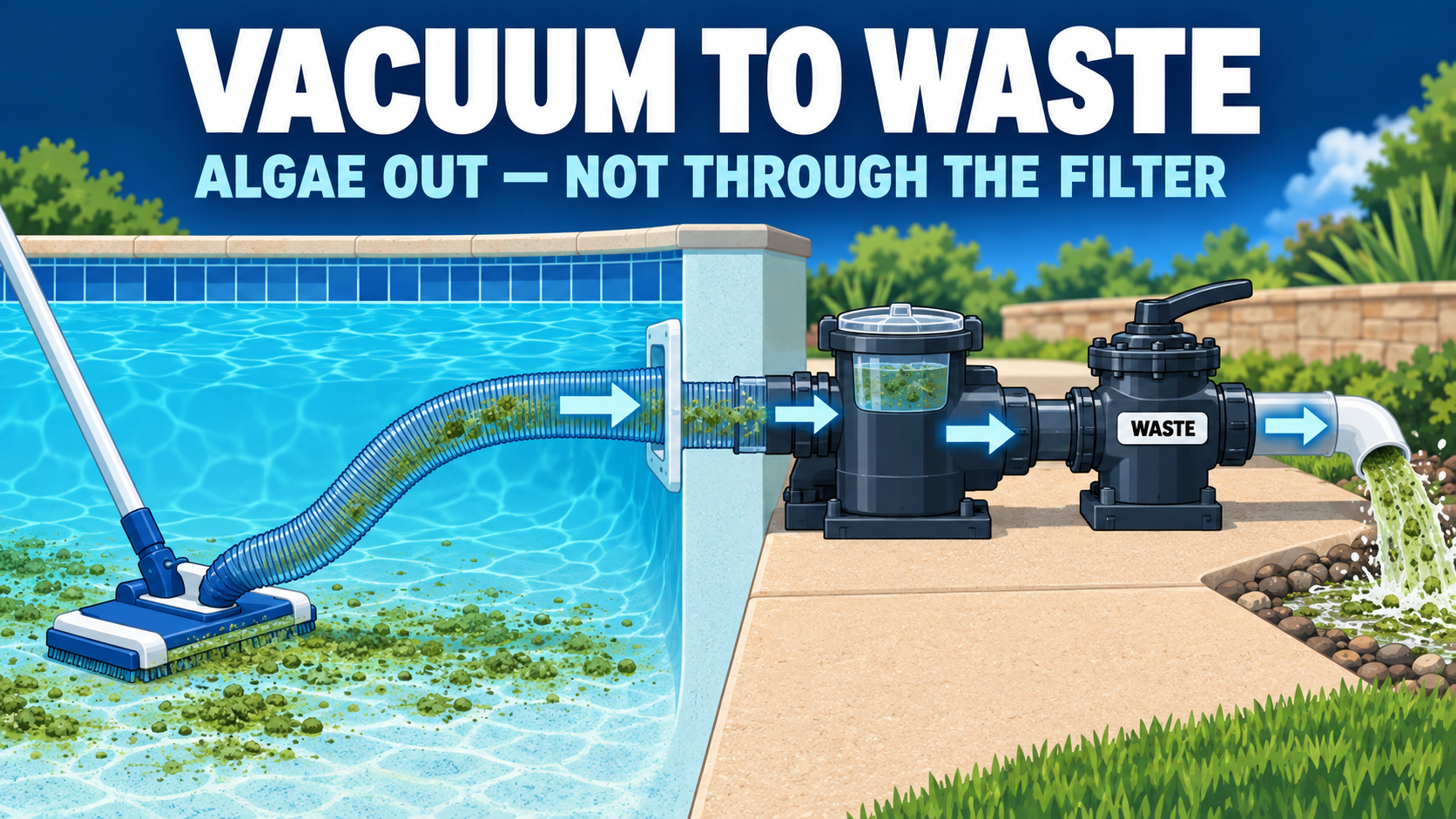
Vacuuming to waste is one of the fastest ways to remove a heavy load of fine debris from a pool without sending it through the filter. Instead of returning water to the pool after it passes the pump, the system sends water and debris out through the waste line. Used at the right time, it can shorten cleanup dramatically.
What “vacuum to waste” means
On equipment that has a multiport valve or another waste setting, vacuuming to waste bypasses the filter. That is useful when the material on the floor is so fine, dense, or plentiful that it could clog the filter or simply circulate back into the pool.
Not every pool is plumbed the same way, and not every filter has a waste option. Check your equipment manual or ask a qualified pool professional before changing valve settings. Never move a multiport valve while the pump is running.
When vacuuming to waste is the right choice
- Dead algae or fine sediment that has settled on the floor after treatment
- DE powder that has returned to the pool after a filter-grid failure
- Heavy dirt, mud, or construction debris
- Fine debris that repeatedly clouds the water after normal vacuuming
It is not automatically the best answer for every dirty pool. Vacuuming to waste removes a meaningful amount of water, so normal filtration, brushing, skimming, and balanced chemistry are often the better first steps for lighter debris.
A service-call lesson: removing green algae cleanly
On one service call, a customer’s pool had about a half inch of green algae lying on the bottom. It was not rooted in the plaster, which made it a good candidate for careful removal rather than aggressively stirring it up.
I used a portable vacuum and moved slowly enough to pull the algae out cleanly without dispersing it across the pool. After one pass, it left a clean bottom behind. The customer was amazed by the difference because the cleanup looked dramatic immediately.
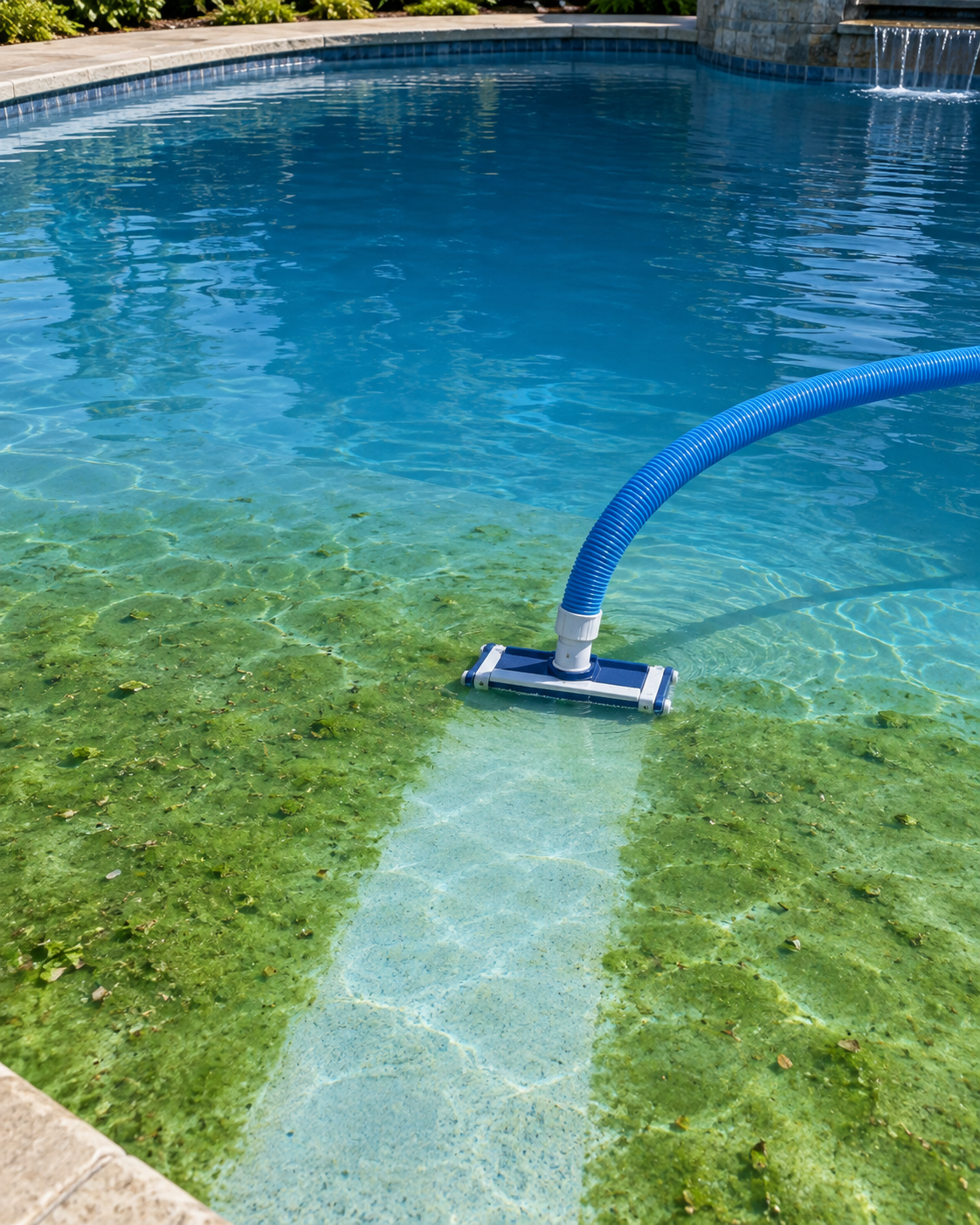
The takeaway: when debris has settled and can be lifted without agitation, controlled removal can be far more effective than rushing through the pool and turning a floor problem into a water-clarity problem.
How to vacuum a pool to waste
- Confirm your equipment can do it. Identify the waste setting and make sure the discharge path is appropriate for your local rules and property.
- Start with a clean system. Empty skimmer and pump baskets, and make sure the pool has enough water for the job.
- Turn the pump off before changing valve positions. Then set the valve to Waste, following the equipment manufacturer’s directions.
- Prime the vacuum hose. Fill the hose with water before connecting it so the pump does not pull excess air.
- Vacuum slowly and deliberately. Move the head gently so fine material is lifted out instead of becoming suspended in the water.
- Watch the water level continuously. Stop before the skimmer begins to draw air. Add water as needed, then restore the system to its normal setting with the pump off.
- Rebalance and recheck. Fresh water changes chemistry. Test sanitizer, pH, alkalinity, and stabilizer as appropriate after refilling.
Common mistakes to avoid
- Vacuuming too fast and creating a cloud of debris
- Letting the water level fall low enough for the pump to lose prime
- Changing a multiport valve while the pump is running
- Discharging water where it can damage property or violate local requirements
- Skipping the water test and refill after the job
When to call a professional
Bring in a pool professional if you are unsure where the waste water goes, the pool has a major algae outbreak, the pump loses prime, the filter valve is leaking, or the debris may be related to a damaged DE filter. A professional can also help determine whether a drain-and-refill, filter repair, or chemical treatment is the better route.
The bottom line
Vacuuming to waste is a targeted cleanup tool, not an everyday setting. When a pool floor is covered in settled algae, DE, mud, or fine debris, slow controlled removal can protect the filter and make the recovery much faster. Just protect the pump, monitor the water level, and test the water after refilling.