
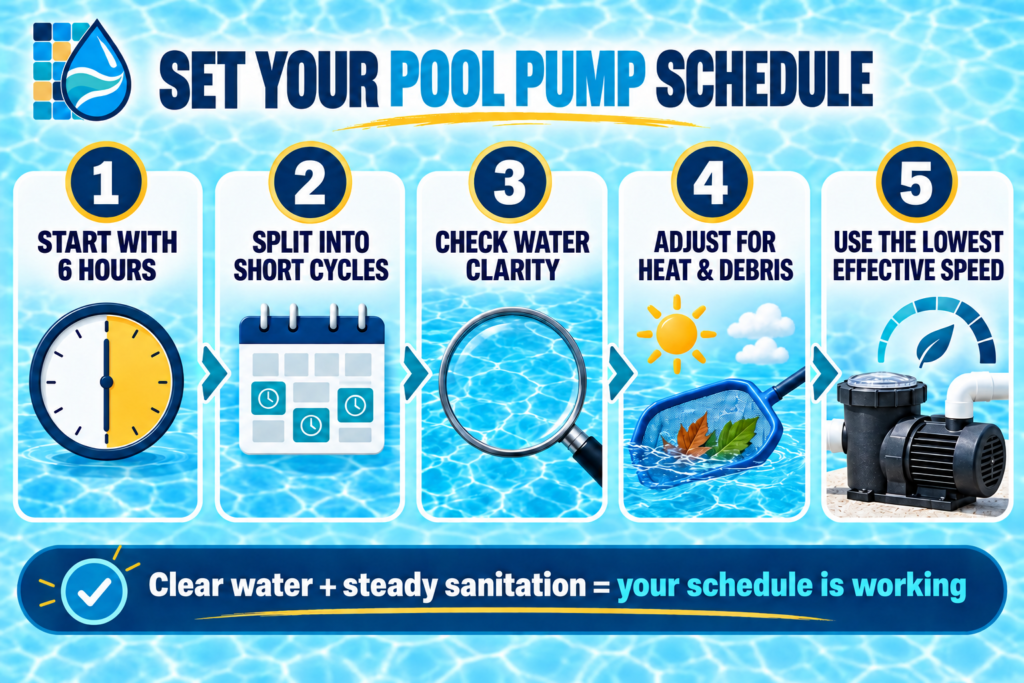
When summer heat arrives, one of the most important pool-care questions is also one of the simplest: how long to run a pool pump. The right answer depends on your pool’s size, equipment, weather, and use—but the pump should be running through the hottest part of the day.
Start with a summer pump schedule that covers peak heat
For many residential pools, a practical starting point is 9 AM to 6 PM during the hottest part of summer. This keeps water circulating while sunlight, heat, swimmers, wind, and debris put the greatest demand on the pool.
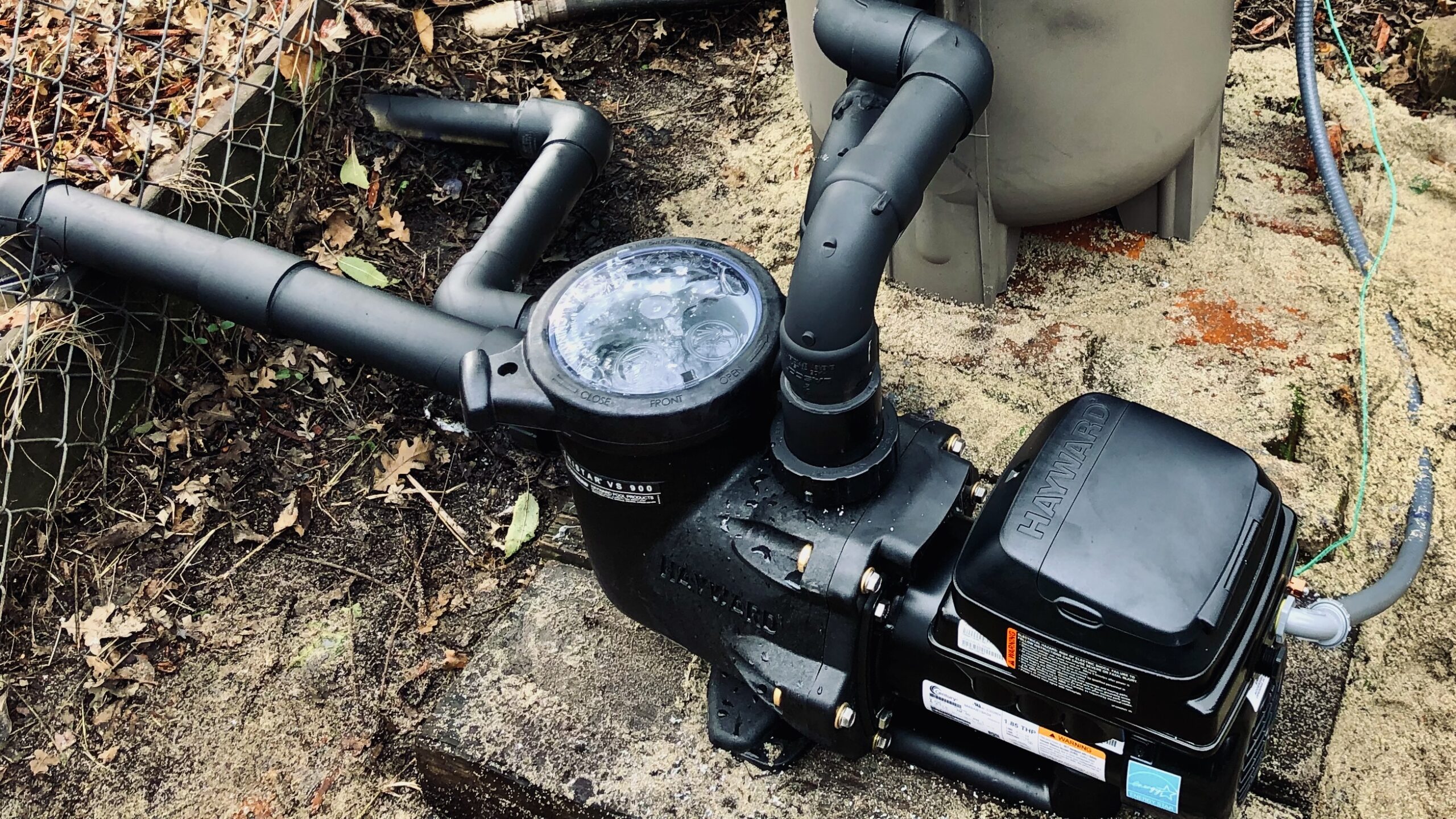
For a variable-speed pump, a common working range is roughly 1,800 to 2,800 RPM, adjusted for the pool’s size, plumbing, filter, features, and water condition. Use your manufacturer’s guidance and confirm that the system has adequate flow at the selected speed.
Signs your pool may not be running long enough
- Water that is starting to look dull or cloudy
- Algae beginning in shallow areas or other low-circulation spots
- Debris lingering on the surface instead of moving toward the skimmers
- Inconsistent chemical readings from one area of the pool to another
Why daytime circulation matters
During hot, sunny weather, the upper layer of pool water can become much warmer than the deeper water. Keeping the pump running helps mix the water, distribute sanitizer, and move debris toward the filter. Sunlight also increases chlorine demand, so circulation during peak heat helps the whole pool receive treated water rather than leaving the surface layer stagnant.
From the field
A pool that wasn’t running long enough usually gave itself away: cloudy water, algae beginning in shallow areas, or debris lingering on the surface. I preferred to run the pump through the hottest part of the day so the water kept moving and chemicals stayed distributed. Without enough circulation, the surface can become much warmer than the deeper water, creating favorable conditions for algae and allowing chlorine near the surface to burn off more quickly in direct sun. Larger pools need longer run times because there is more water to circulate. For many pools I serviced during summer, I recommended a schedule around 9 AM to 6 PM, with variable-speed pumps typically running between 1,800 and 2,800 RPM depending on the pool’s size and needs.
— Chris Barnes, former pool-service owner and CPO
Adjust for your pool—not a generic rule
Large pools, pools with heavy swimmer use, water features, lots of trees, or prolonged heat may need longer run times or a higher speed. A smaller, sheltered pool may need less. The best indicator is the pool itself: clear water, steady circulation, clean skimmers, and properly balanced chemistry.
If your pool stays cloudy even with good circulation, read our cloudy pool water troubleshooting guide. If your pump struggles to establish flow at all, start with these pump-priming checks.
A simple summer routine
- Empty skimmer and pump baskets regularly.
- Check water chemistry at least weekly, and more often during extreme heat or heavy use.
- Watch the filter pressure gauge and clean the filter when it reaches its documented service point.
- Confirm the pump is actually running during the hottest portion of the day.
- Make one adjustment at a time, then watch how the pool responds.
Safety note: Before opening equipment or changing valves, turn off power at the appropriate control and follow the manufacturer’s instructions. When in doubt, contact a qualified pool professional.