
If your pool pump won’t prime, it can only move water once its housing and suction line are properly filled with water. When it loses prime, the pump may run loudly, move little or no water, or fill with air instead of water. The most common causes are simple: low water, a clogged skimmer basket, a dry or damaged pump-lid O-ring, a loose fitting, or a blocked suction line. But some problems are less obvious.
Safety first
Turn the pump off before opening the pump lid, moving valves, or opening a filter. If the equipment is hot, leaking, electrical, or unfamiliar, stop and call a qualified pool professional. Never open a pressurized filter.
A service-route example: when the solar loop was the problem
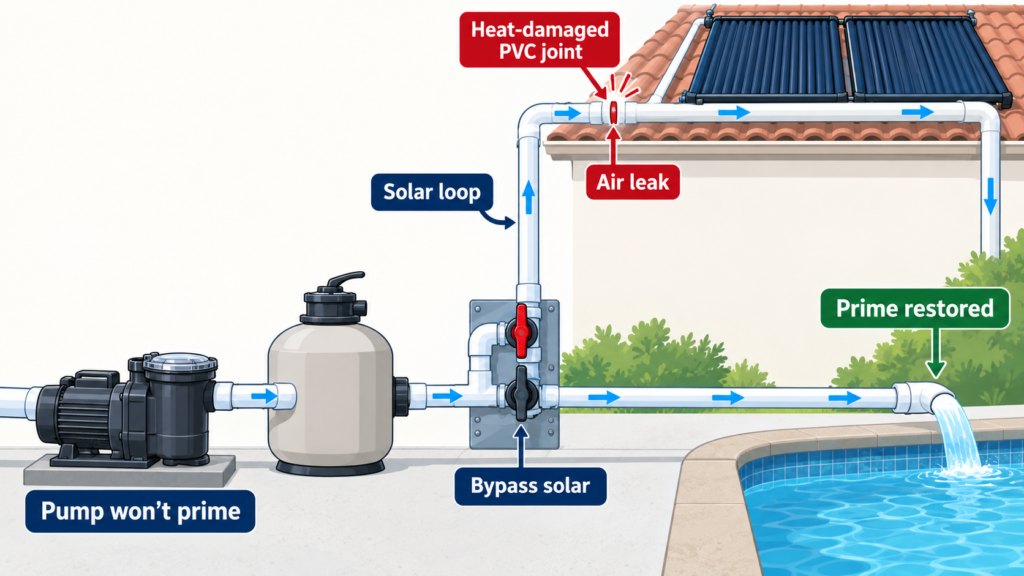
On one service call, I found a pump that simply would not prime. The system had solar heating on the roof. It was not showing an obvious water leak at ground level, but summer heat had damaged the glue at PVC joints in the rooftop solar plumbing. That allowed air into the system.
I isolated the solar loop and bypassed the roof. The pump primed right up. The homeowner then had the solar company repair the rooftop plumbing, and the system worked normally again.
This is why an air leak does not always leave a puddle. On the suction side, a small opening can draw air in while the pump runs. With elevated solar plumbing, valve settings and plumbing layout can also change how a leak affects circulation. If bypassing the solar loop restores prime, leave it bypassed and have the solar system inspected and repaired by a qualified provider.
Start with these safe checks
- Confirm the pool water is high enough to cover the skimmer opening.
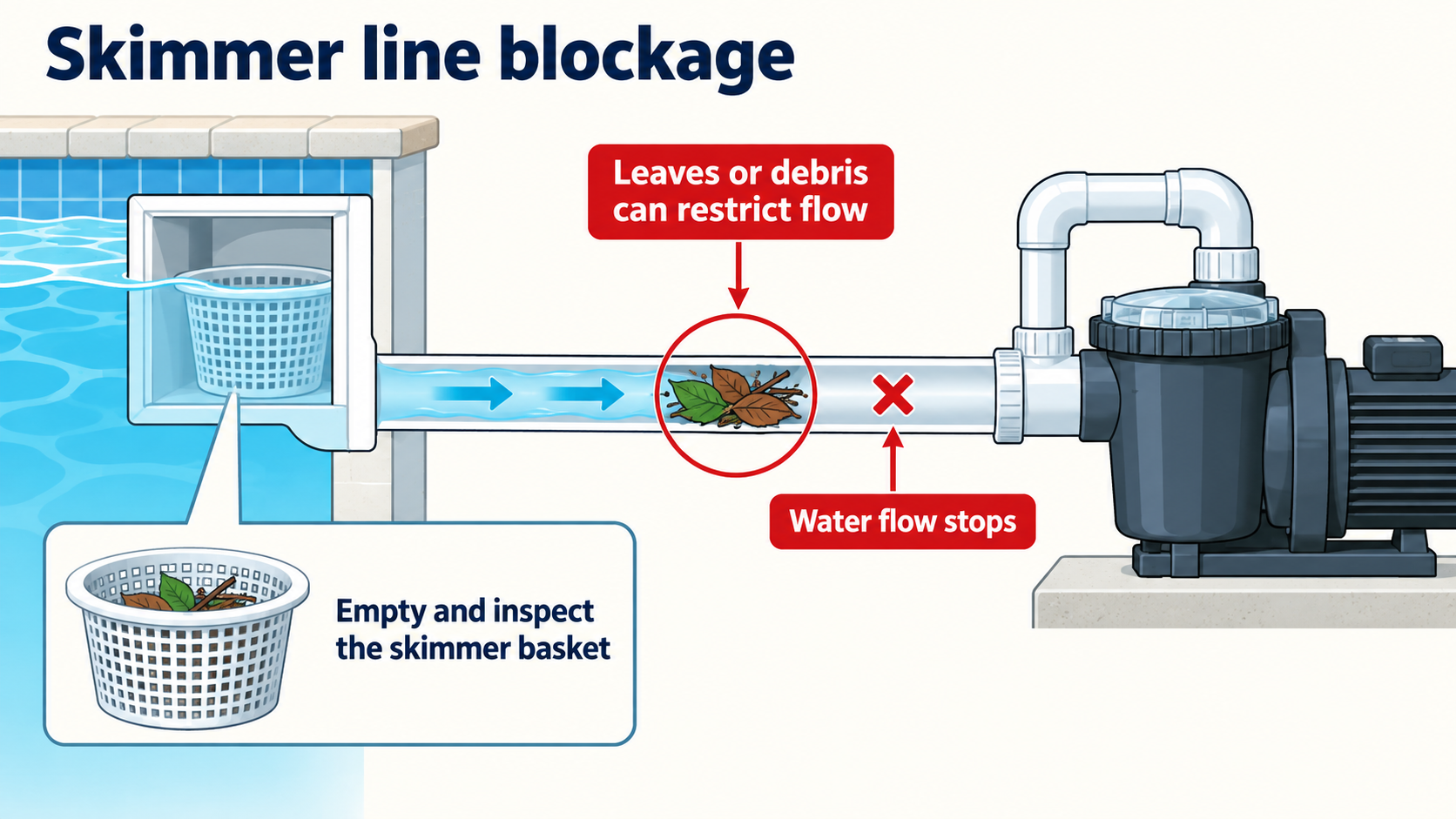
- Turn the pump off. Empty and inspect the skimmer basket and the pump basket; replace damaged baskets.
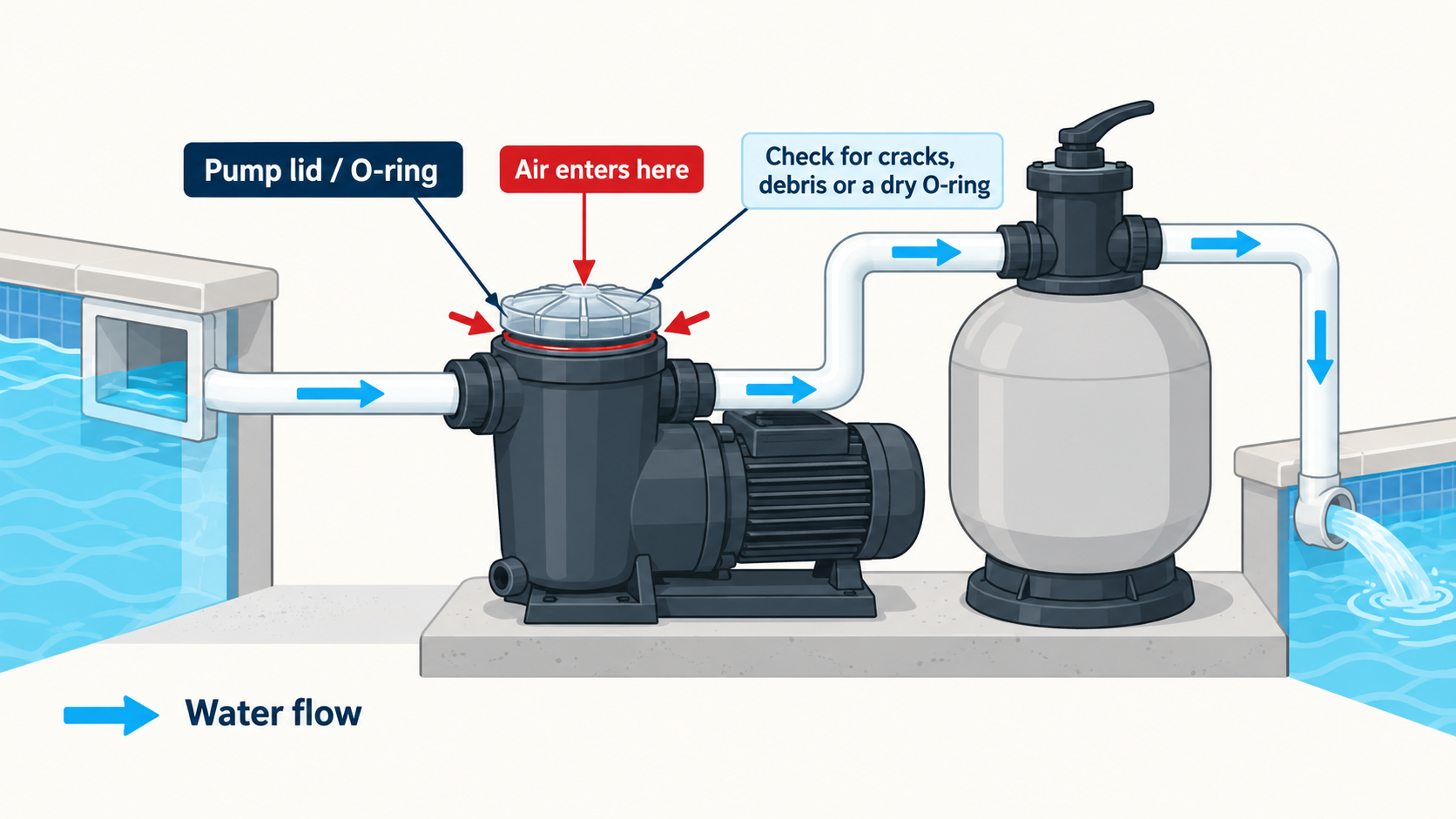
- Inspect the pump lid, lid O-ring, and sealing surface. Remove debris, look for cracks or flattening, and use only the lubricant recommended by the manufacturer.
- Look for air bubbles under the pump lid or returning to the pool after restart.
- Confirm suction and return valves are in normal operating positions; never force a stuck valve.
- If the pool has solar, water features, or other raised plumbing, identify how to isolate those features. If the pump primes only with one feature bypassed, leave it bypassed and arrange a repair.
Common priming problems
Pump-lid or O-ring air leak
A warped lid, debris on the sealing surface, or a damaged or dry O-ring can admit air. Correct the seal first.
Skimmer-line restriction
Leaves, debris, or a missing or broken basket can reduce water flow. Start at the basket; do not use improvised pressure tools.
Solar-loop or elevated-plumbing issue
Long rooftop runs, valve problems, or failed PVC joints can affect priming. Bypass the feature and call the appropriate professional if the system restores prime.
Low pool water
A low water level can pull air through the skimmer.
More complex air leaks
Cracked fittings, worn valves, or underground plumbing need professional diagnosis.
When to call a professional
Call a pool or solar professional if the pump will not hold prime after basic checks, fittings are visibly cracked, plumbing must be altered, solar roof plumbing is involved, the motor is noisy or hot, or there is any electrical concern.
The bottom line
A pump that will not prime is often telling you that water flow is being interrupted or air is entering the system. Start with the simple checks, avoid forcing equipment, and use isolation valves only when you understand what they control. In the solar-loop service call above, bypassing a heat-damaged rooftop line was the clue that turned a stubborn priming issue into a clear repair path.