
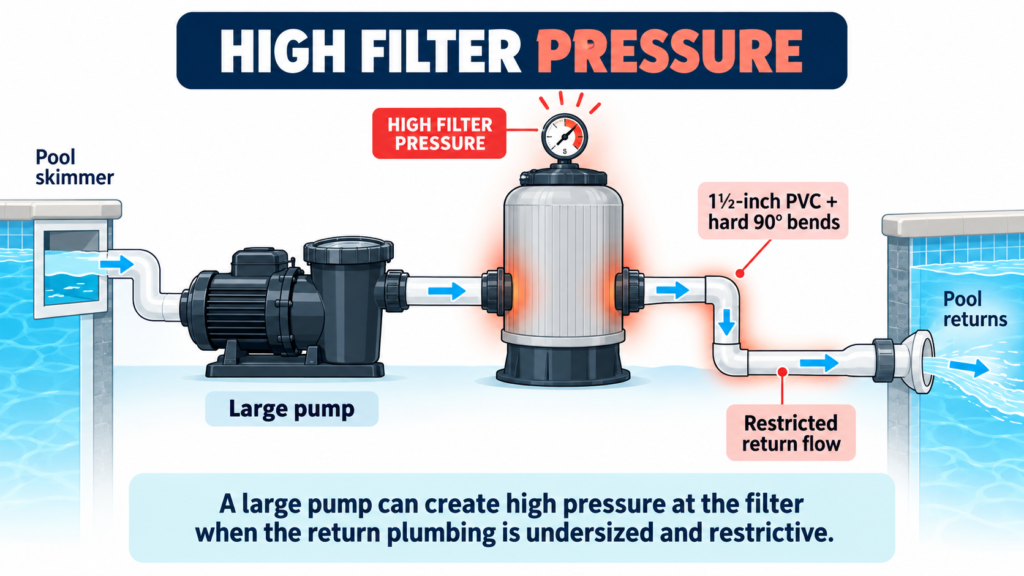
High pool filter pressure is a warning that water is having trouble moving through your pool system. Sometimes the solution is a basic filter cleaning. Other times, the filter is only showing you a restriction somewhere else in the plumbing. This guide explains the most common causes, how to approach them safely, and when it is time to bring in a qualified pool professional.
Start safely before checking filter pressure
Turn the pump off before opening the filter or moving valves. Open the air-relief valve and confirm the pressure gauge reads zero before loosening a clamp, lid, or union. Never open a pressurized filter. If a tank, clamp, lid, plumbing fitting, or gauge looks damaged, stop and have the equipment inspected.
Know your clean-pressure baseline
Every pool has its own normal operating pressure. After a thorough filter cleaning or a new cartridge installation, record the pressure with the system running normally. That is your clean-pressure baseline. In many systems, cleaning is due when pressure rises about 20–25% above that number—not simply when it reaches an arbitrary PSI.
Common reasons a pool filter pressure is high
- Dirty filter media: Cartridges, DE grids, and sand can become loaded with pollen, algae, oils, dust, and debris.
- Restricted return plumbing: Closed valves, incorrect valve settings, undersized plumbing, or tight fittings can make it hard for water to leave the filter and return to the pool.
- Undersized or failing equipment: A pump, filter, and plumbing system need to work as a matched set. A large pump can create problems when the rest of the system cannot accept its flow.
- Gauge problems: A gauge that does not return to zero when the pump is off may not be giving you trustworthy information.
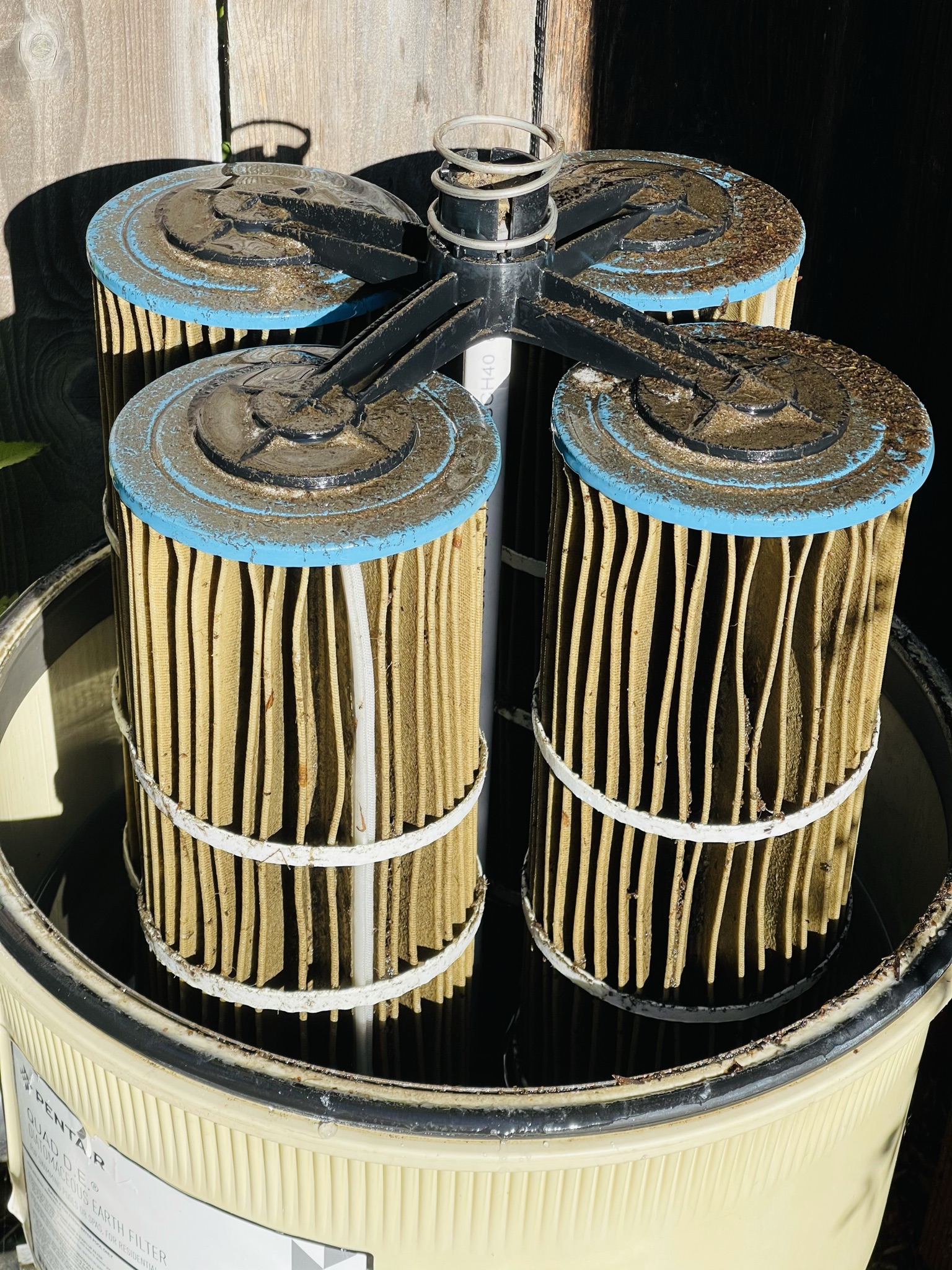
From the field: when the plumbing was the problem
On one service call, I found a system with small 1½-inch PVC plumbing, several hard 90-degree bends, and a larger pump installed. The pump was pushing more water toward the filter than the undersized return plumbing could move easily back to the pool. That created significant back pressure at the filter.
The solution was not another filter cleaning. We replumbed the system with 2½-inch PVC, reducing the restriction and allowing the water to return to the pool more freely. The filter pressure came down to a safe level, and the reduced resistance also lowered stress on the pump and filter housing.
Why plumbing size and fittings matter
Pool plumbing is not just a route for water—it determines how easily the system can circulate. Smaller pipe, sharp turns, partially closed valves, long runs, and restrictive features all increase resistance. When resistance rises, the pump has to work harder and the pressure gauge often reflects it.
That does not mean every high-pressure pool needs a replumb. It does mean that if a clean filter still runs at unusually high pressure, the equipment pad and valve layout deserve a careful inspection.
A practical high-pressure troubleshooting order
- Confirm the gauge returns to zero when the pump is off.
- Verify valves are positioned correctly and returns are open.
- Clean or inspect the filter according to the manufacturer’s procedure.
- Restart the system and compare the reading with your clean-pressure baseline.
- Look for weak return flow, closed valves, damaged fittings, or a recent equipment change.
- Call a qualified pool professional if pressure remains high, equipment is leaking, or you suspect a plumbing or sizing issue.
When high pressure becomes urgent
Shut the system down and seek professional help if you see water spraying from a clamp or lid, a cracked housing, a bulging tank, a damaged pressure gauge, or a sudden major pressure jump. These are equipment-safety issues, not a reason to keep experimenting with the pump running.
Key takeaway
A dirty filter is common, but it is not the only explanation for high pressure. Start with the clean-pressure baseline, check the simple restrictions, and remember that pump size, pipe diameter, and valve configuration all affect how hard the system has to work.
Need help figuring out what your pressure reading means? Ask Chris About Your Pool.