
Pool Chemical Safety: Storage, Mixing & Handling
Pool chemicals protect swimmers when they are used correctly. The concentrated products in their containers are a different story. This guide shows first-time owners how to store, measure, add, and respond to chemicals without creating preventable hazards.
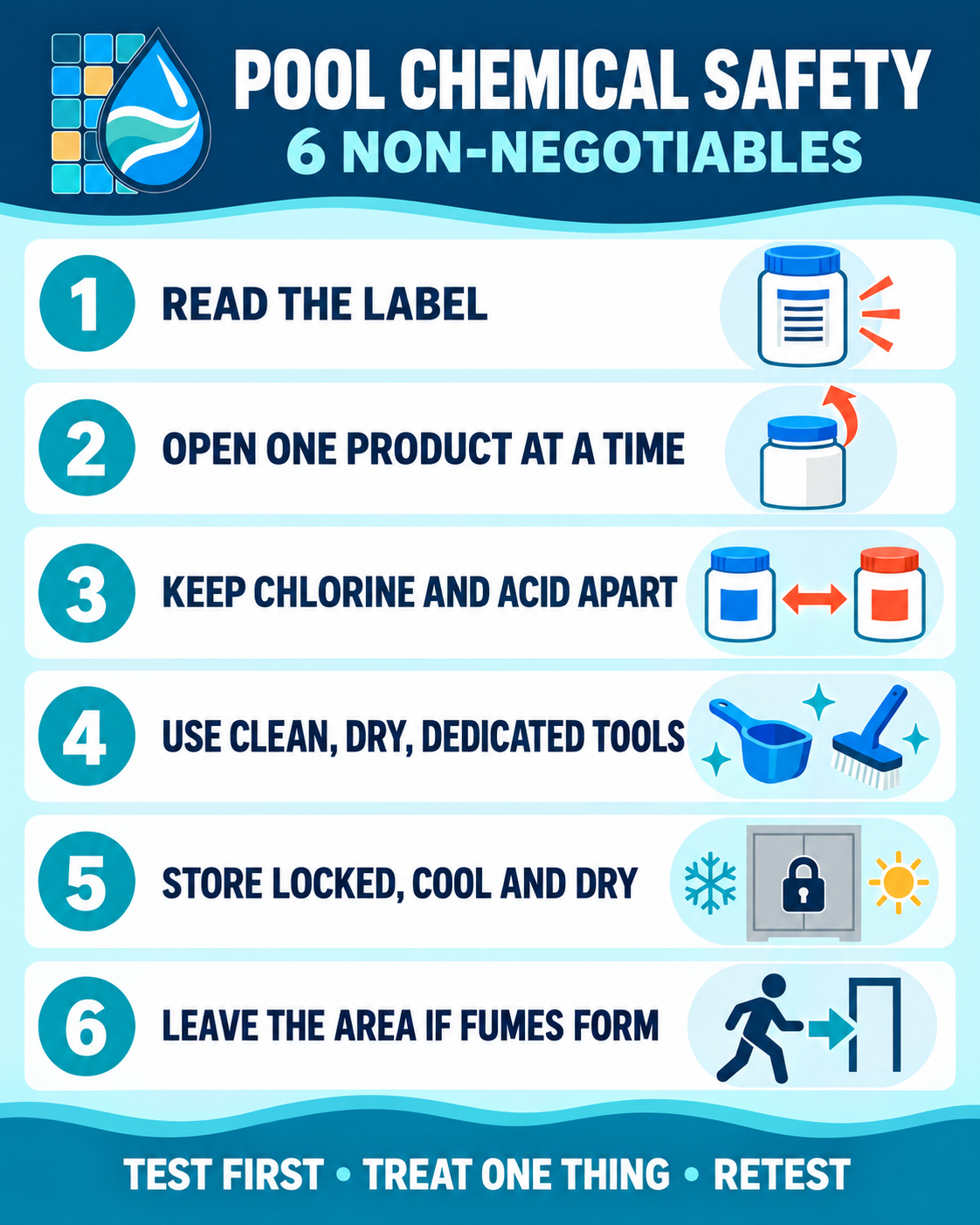
Handle one chemical at a time.
Read the entire label before opening the container. Put on the label-required protective equipment, work in good ventilation, use a clean dedicated measuring tool, close the container, and put it away before opening a different product.
Read first
The label is the controlling instruction for dose, protective equipment, dilution, application, storage, and re-entry.
Measure carefully
Confirm pool volume and current test results. More product is not automatically better, safer, or faster.
Keep it separate
Finish with one product, close it, clean the work area as directed, and allow the label-required circulation time before another addition.
Set up the job before you start.
Good chemical handling begins before the lid comes off. If the label is missing, damaged, or unreadable, do not guess what is inside.
- Test the water and write down the results.
- Confirm the pool's approximate gallon volume.
- Read the full product label and current Safety Data Sheet.
- Use only the goggles, gloves, clothing, or respiratory protection specified on the label.
- Choose a dry, well-ventilated work area away from children and pets.
- Use a clean measuring tool dedicated to that one product.
- Open only one chemical container at a time.
- Check that the circulation system is operating as the label requires.
Products that must stay apart.
Treat every concentrated pool product as incompatible unless its own label says otherwise. The table below highlights common separation rules; it is not a substitute for the label or SDS.
| Product or situation | Keep it away from | Why this matters |
|---|---|---|
| Chlorine products Liquid chlorine, cal-hypo, dichlor, trichlor | Acids, ammonia, cleaners, fuels, organic debris, and other chlorine types | Mixing can release toxic gas, intense heat, fire, or an explosive reaction. |
| Acids Muriatic acid, dry acid | Every chlorine product, metal tools, and incompatible cleaners | Chlorine plus acid can release toxic chlorine gas. Acid can also corrode nearby metals. |
| Dry chemicals | Water, rain, damp floors, wet scoops, leaking pipes, and liquid containers stored above them | A small amount of water in concentrated dry chemical can generate heat and gas. |
| Old or unknown products | Fresh product—even when the label appears to name the same chemical | Contamination or deterioration may make the reaction unpredictable. |
Build a dry, cool, locked chemical zone.
CDC recommends storing pool chemicals in their original manufacturer-labeled containers, protected from moisture, direct sunlight, heat, flame, children, and animals. Store incompatible products in separate dedicated locations and follow local fire and building codes.
Choose the location
Use a clean, dry, well-ventilated area. CDC advises storage below 95°F/35°C unless the manufacturer specifies a lower limit. Do not store gasoline, paint solvents, oily rags, food, drinks, or ignition sources nearby.
Arrange the containers
Keep every product upright, closed, and in its original container. Separate chlorine products from acids and from one another. Keep liquids from leaking onto dry products, and protect all containers from rain, hoses, and wet floors.
Control access
Lock the storage area so children, teens, guests, and pets cannot reach it. Keep labels facing outward and maintain enough light to read them clearly.
Plan for damage or disposal
Do not repackage a leaking, deteriorated, unwanted, or unlabeled chemical. Isolate the area, consult the manufacturer, and contact your local household hazardous-waste or hazardous-materials authority for instructions.
Make one controlled adjustment at a time.
The label decides the exact dose and method. This workflow keeps the process orderly without replacing product-specific instructions.
Test before treating.
Use a dependable test method and confirm the result before adding anything. Do not treat water based on appearance alone.
Calculate the dose from pool volume.
Use the label's dosing chart. If volume is uncertain, make a conservative correction and retest rather than overshooting.
Prepare exactly as the label states.
Put on required protective equipment. Keep the product dry until application, minimize dust and splashes, and stay upwind when working outdoors.
Add the product by the labeled method.
Never improvise by combining products in a bucket, feeder, skimmer, or container. Never place a different chlorine type into a feeder that contains residue.
Close and store the container.
Close one product and return it to its dedicated storage position before opening another. Keep each scoop with only its assigned chemical.
Circulate, wait, and retest.
Follow the label for pump operation, spacing between treatments, and when swimmers may return. Verify that the water meets safe operating targets before swimming.
Leave the area, get clean, and get help.
If you see fumes, feel eye or throat irritation, smell an unusually strong chemical odor, or suspect chemicals mixed, do not lean over the container or try to neutralize the reaction. Move people and pets away. Follow the label, SDS, and local emergency instructions.
Fumes or breathing symptoms
Leave the area and get to fresh air. Call 911 for trouble breathing, wheezing, chest tightness, collapse, or severe symptoms.
Eyes or skin
Remove contaminated clothing and rinse with plenty of lukewarm water. CDC advises flushing burning eyes for 10–15 minutes. Do not use eye drops unless a medical professional directs you.
Poison guidance
In the United States, call Poison Help for case-specific advice:
1-800-222-1222Small shortcuts can create serious hazards.
Using a damp scoop
Moisture can start a reaction inside concentrated dry chlorine. Keep dedicated tools clean and completely dry.
Refilling an old container
Do not transfer chemicals into food, drink, household-cleaner, or previously used chemical containers. Keep the original label and package.
Adding chemicals through the wrong equipment
A skimmer, feeder, or chlorinator may retain another product. Use only the application point the current label and equipment manual permit.
Storing acid beside chlorine
A leak, tip-over, or corroded cap can bring incompatible chemicals together. Separate them into dedicated, compatible storage locations.
Hosing down a chemical spill
Water can intensify a reaction or move incompatible material into drains. Isolate the area and follow emergency guidance.
Assuming a strong smell means “more chlorine”
Odor can come from irritating chloramines or a release. Do not diagnose fumes by smell; leave the area if irritation begins.
Questions first-time owners ask.
Can I add chlorine and muriatic acid on the same day?
Follow both product labels. Never mix them or add them together. Treat one condition at a time, close and store the first product, circulate for the label-required period, and retest before considering another adjustment.
Can I use the same scoop for different pool chemicals?
No. EPA guidance recommends separate, designated tools for each chemical. Residue on a scoop can contaminate another container and trigger a reaction.
Is it safe to store pool chemicals in a hot garage?
Only if the space meets every label requirement. CDC recommends storage below 95°F/35°C and away from direct sunlight, moisture, flames, and ignition sources. Many garages become hotter than that and also contain fuels or tools that make them a poor choice.
Should I pour water into granular chlorine to dissolve it?
No. Only pre-dissolve when the label specifically directs it. When directed, add the chemical to water in the stated sequence—never water onto concentrated chemical.
What should I do with old or unlabeled pool chemicals?
Do not mix, repackage, or place them in household trash or drains. Contact the manufacturer or your local household hazardous-waste or hazardous-materials program for instructions.
When should I hire a pool professional?
Call a trained professional when you cannot identify a product, the storage area has damaged or leaking containers, a feeder may contain incompatible residue, the correct dose is uncertain, or the job requires specialized protective equipment or spill response.
Test first. Treat one thing. Retest.
Safe chemical handling becomes easier when you know which water result you are correcting and why. Use the testing guide before reaching for another product.
Authoritative safety references
This educational guide summarizes general safety practices for homeowners. Product labels, Safety Data Sheets, equipment manuals, local codes, and emergency authorities control your specific situation.
- CDC: Pool Chemical Safety
- CDC: Use Pool Chemicals Safely poster
- U.S. EPA: Safe Storage and Handling of Swimming Pool Chemicals
- CDC: Chlorine Chemical Emergency Fact Sheet
Editorial review: safety claims checked against the sources above on September 2, 2026. No generic dosing quantities are given because labels and pool conditions differ.