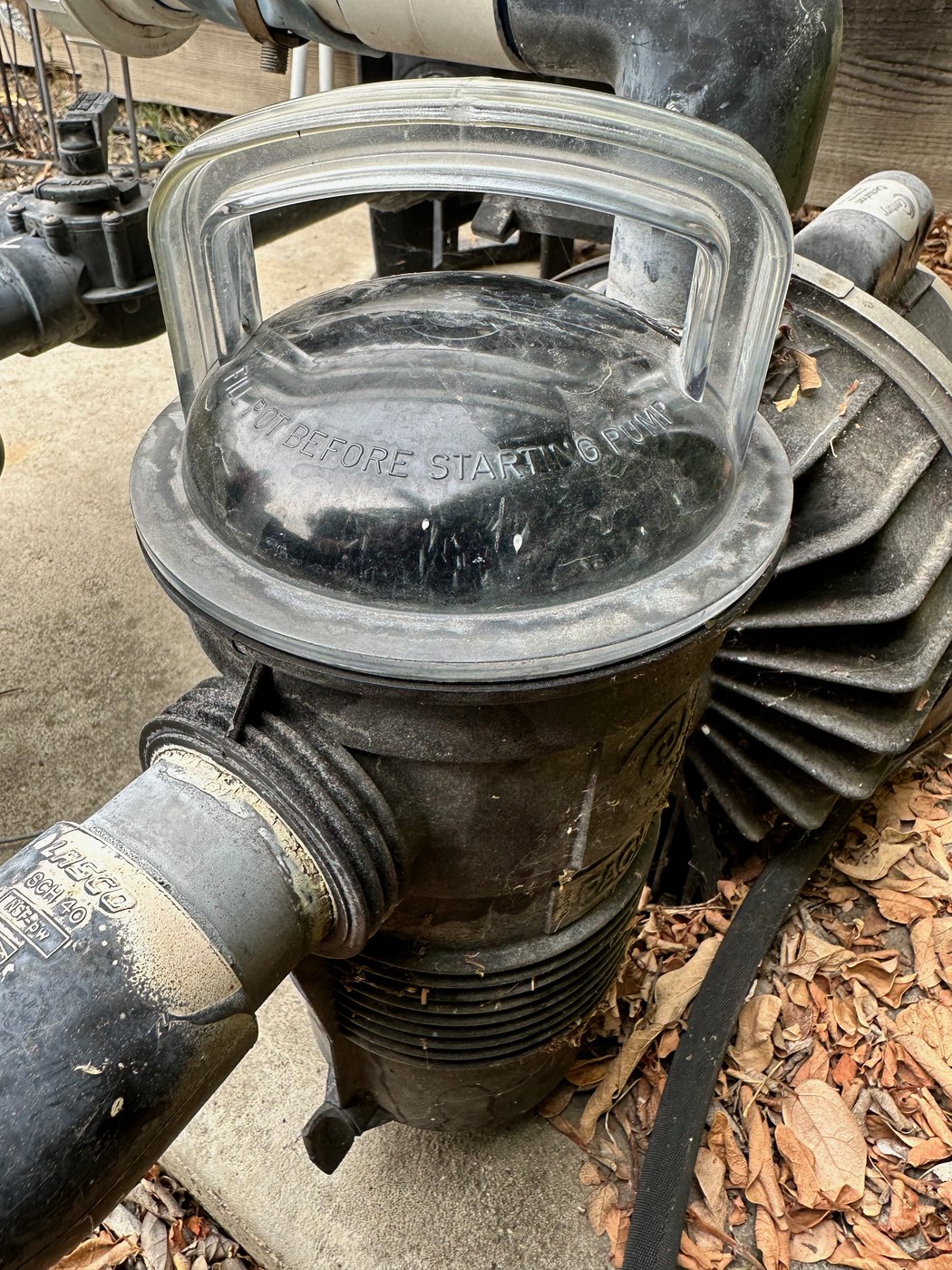
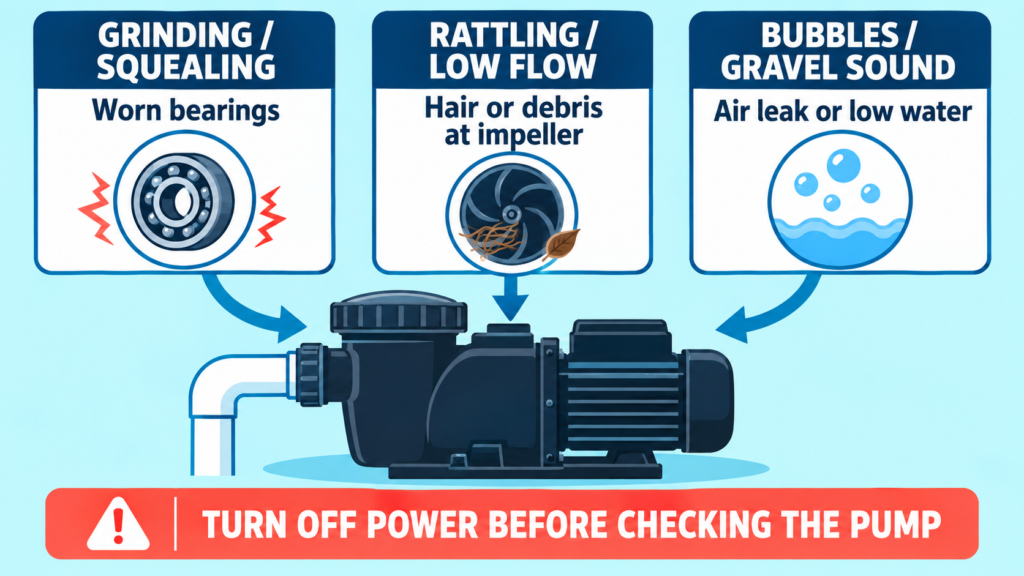
A pool pump should make a steady operating sound—not a grinding, screaming, rattling, or strained noise. The sound often points to the part of the circulation system that needs attention, and catching it early can help protect the pump, filter, and water quality.
Start with safety
Turn off power at the breaker before opening any pump lid, basket, or housing. Never loosen a clamp, lid, union, or filter component while the system is pressurized. If you are unsure how to isolate power or relieve pressure safely, call a qualified pool professional.
What the sound can mean
Grinding, squealing, or a high-pitched whine often points to worn motor bearings. Bearings can wear gradually from age, heat, moisture, or long operating hours. On older single-speed pumps, this was one of the most common sources of serious pump noise I encountered.
Rattling, growling, or suddenly strained operation may mean debris is at the impeller. Hair is a frequent culprit, especially on commercial pools or heavily used pools where a large number of swimmers use the water in a short period.
A hollow, gravel-like sound can also be a circulation warning. Low water, a blocked basket, a suction-side air leak, or a closed valve can reduce the water reaching the pump.
Quick checks a homeowner can make
- Check that the water level is around the middle of the skimmer opening.
- Empty the skimmer basket and pump basket.
- Inspect the pump-lid O-ring for damage or debris.
- Confirm routine valves are open and return flow looks normal.
- Compare filter pressure with the clean-pressure baseline for your pool.
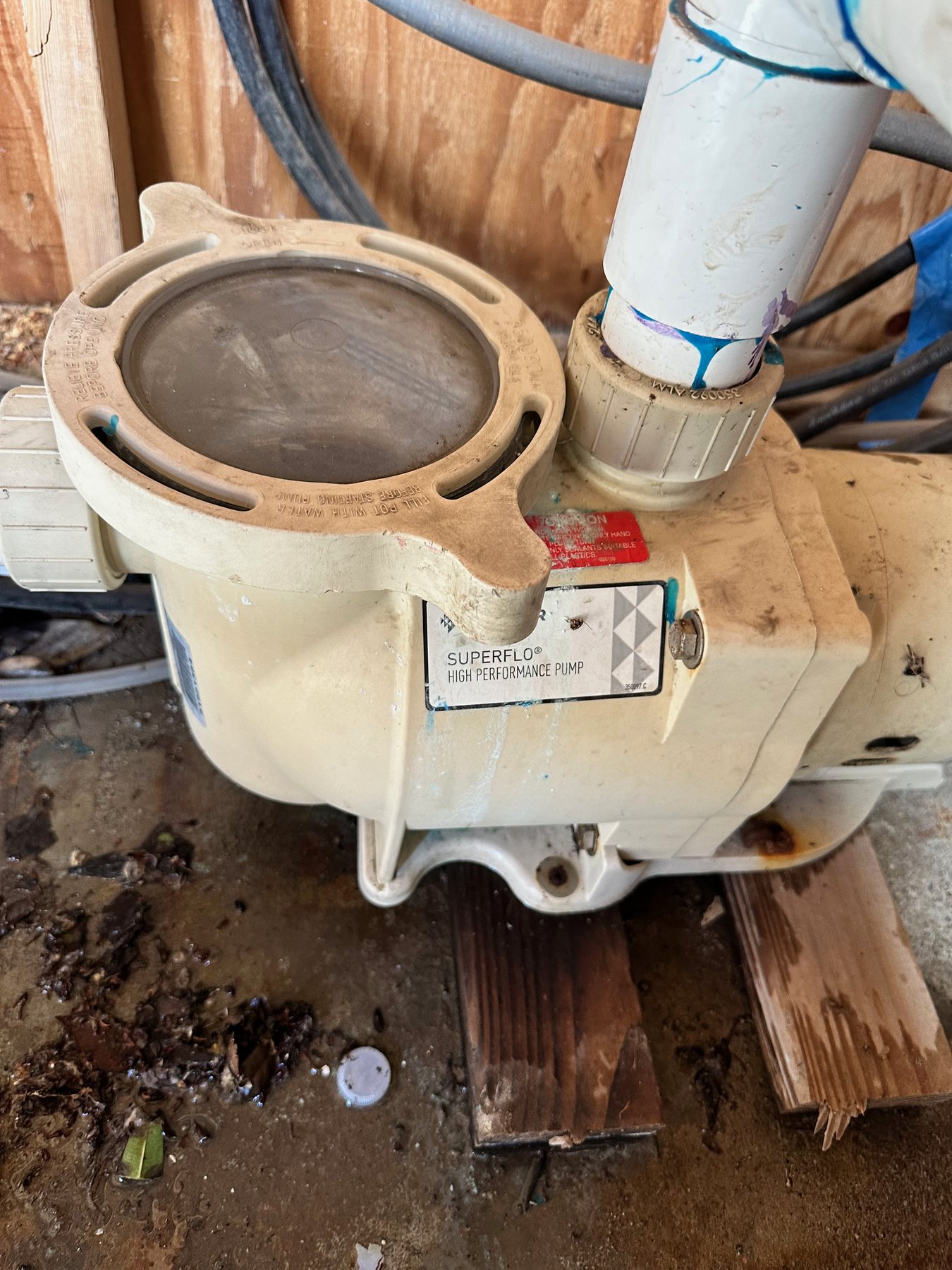
If the basket is clear but the pump is still noisy and flow is weak, the impeller may be obstructed. On some modern pumps, a homeowner can remove the basket and carefully use needle-nose pliers to pull out visible hair or debris near the impeller opening. Do not force anything, reach into moving equipment, or dismantle the motor unless you are comfortable with the manufacturer’s instructions.
From the field: bearings versus impeller hair
Most loud pumps I dealt with—especially older single-speed models—were noisy because the motor bearings were worn. That is a repair that needs to be addressed before the motor fails altogether. Another common cause, particularly on commercial pools with lots of swimmers at once, was hair clogging the impeller. That was usually much less costly to fix. Depending on the pump, we would disassemble the back housing and clear the impeller, or on more modern pumps remove the basket and use needle-nose pliers to remove what was impeding it.
When worn bearings are likely
Call a pool professional if the noise is a persistent metal-on-metal grind, a sharp squeal that changes with speed, or a loud hum even when baskets and water level are correct. A technician can confirm whether the bearings, shaft seal, motor, or impeller are responsible. Bearing replacement may make sense on a serviceable motor; on an older or corroded unit, replacement can be the more reliable choice.
When to stop the pump and get help
Stop running the pump and arrange service if you notice smoke, a burning smell, water leaking from the motor area, repeated tripped breakers, a very hot motor, a cracked housing, or a sudden loss of circulation. Those symptoms can create equipment damage or an electrical hazard.
Preventing pump noise
Keep baskets intact and empty them regularly, especially during leaf drop or high swimmer use. Keep water at the proper level, maintain a clean filter, and make sure valves are in their normal operating positions. A variable-speed pump running at an appropriate programmed speed is usually quieter than an older single-speed pump—and often gives you longer, steadier circulation.
The bottom line
A noisy pool pump is worth investigating early. Check the simple flow and debris issues first, but treat grinding and squealing as a warning that bearings or other internal components may need professional attention. Correcting a hair-clogged impeller can be straightforward; ignoring worn bearings can cost much more later.